Material name and geological context
The Encyclopedia of Modern Ukraine places granite and related rocks within the igneous-rock context. Environmental-impact assessment materials describe development of the Pokostivske granodiorite deposit. These documents support the existence of the geological object and the rock name used in that document. They do not establish NIKA GRAN quarry ownership, current reserves, availability of a particular batch or a permanent colour.
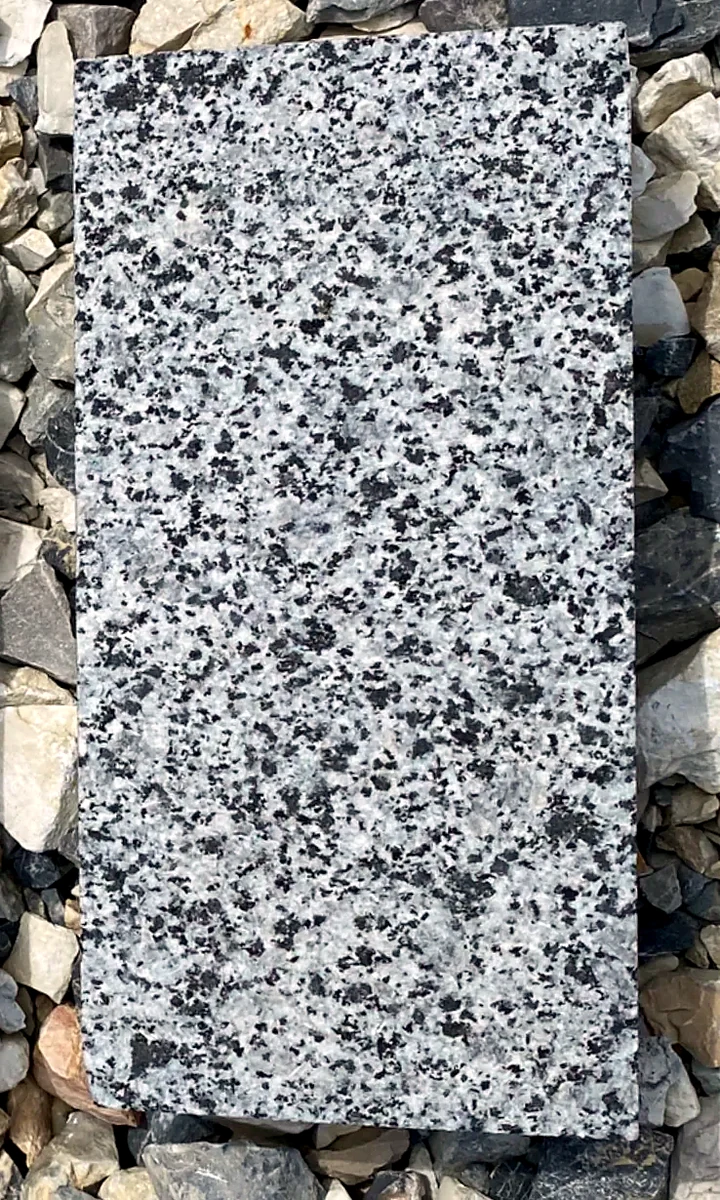
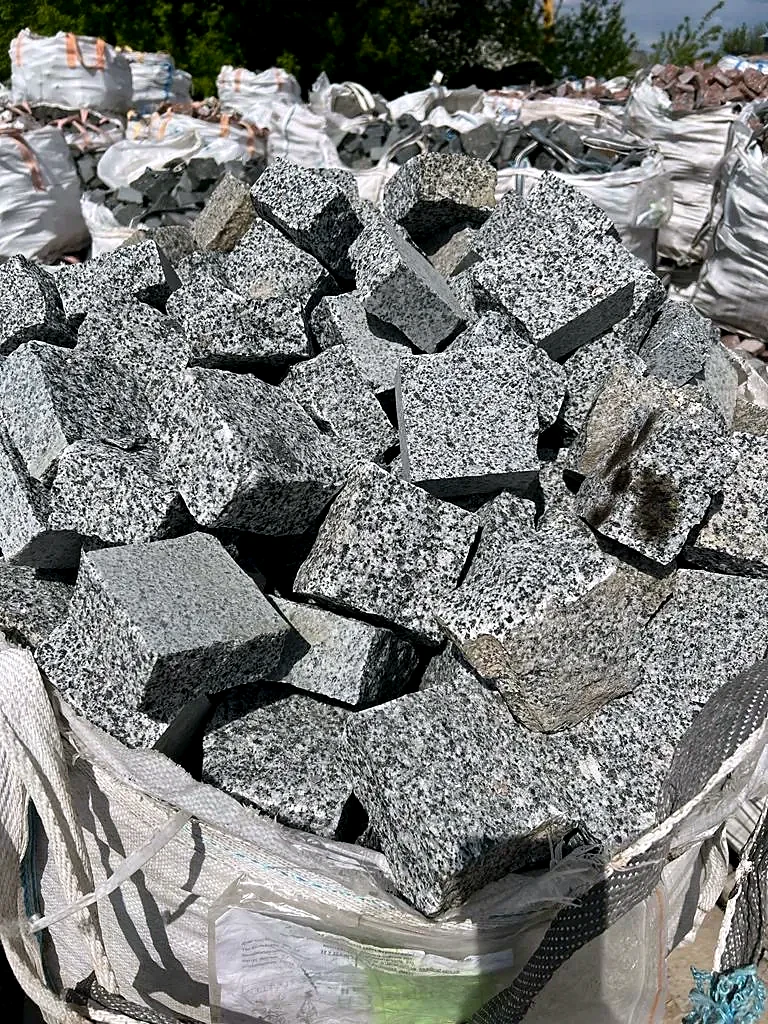
The Pokostivka material page and the general stone range use NIKA GRAN’s own photographs of a physical sample. They support preliminary assessment of visual character, not a guarantee for every future order. For visual comparison, also open the Leznykivske material page.
| Selection point | What can be assessed initially | What must be confirmed for the batch |
|---|---|---|
| General tone | grey character with contrasting grains | actual shade and variation range |
| Pattern | natural granular structure | frequency of dark and pale inclusions |
| Finish | polished, honed, thermal, split and others | appearance of the ordered finish |
| Format | product types shown in the catalogue | dimensions, tolerances and quantity |
| Batch | general commercial material name | availability, sorting and approved sample |
Appearance in different products
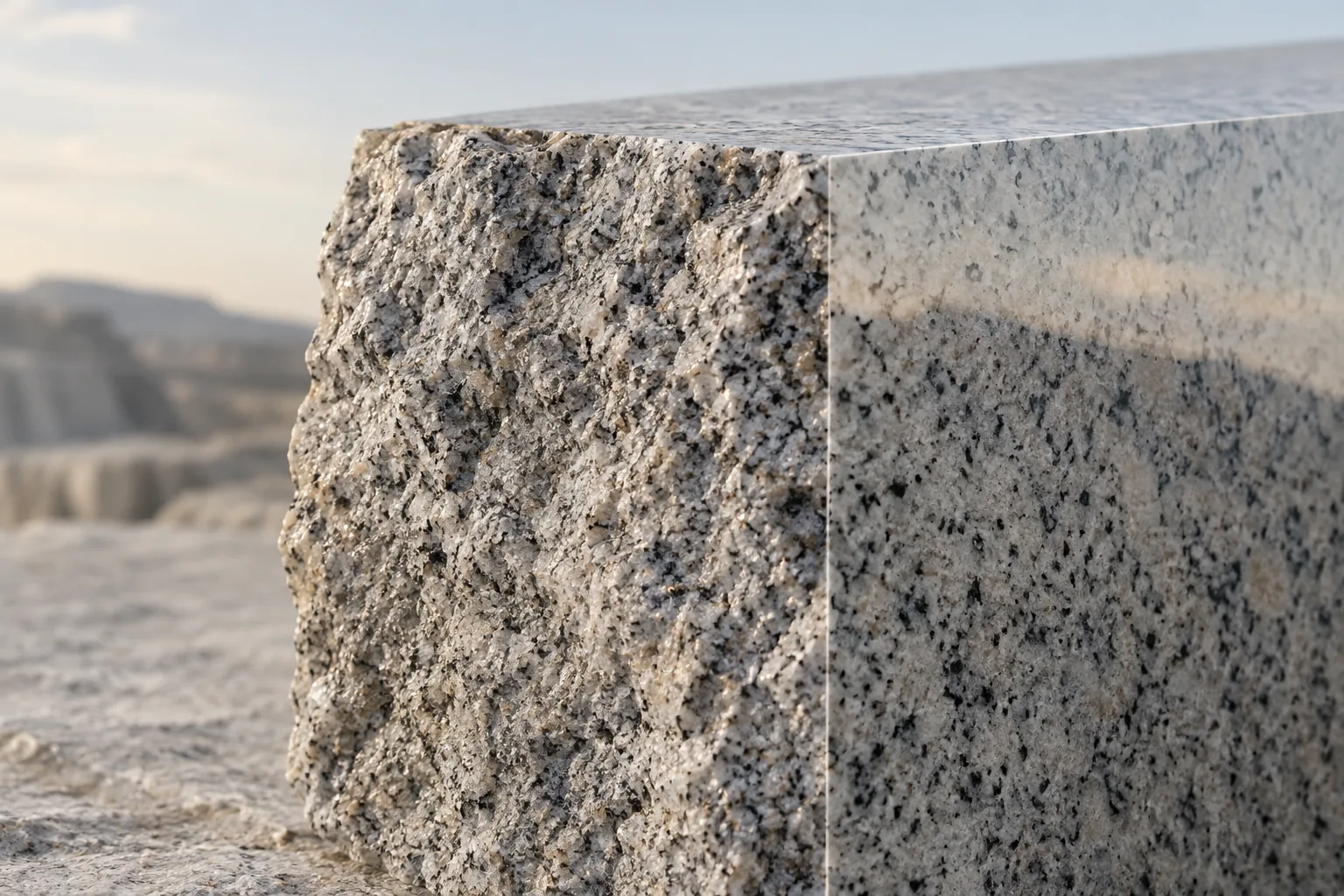
On sawn paving, precise sides emphasise regular joints. Split setts show natural fracture and stronger relief. Paving slabs reveal a larger area of pattern, while cladding plates require agreement on direction and adjacency. Granite plates and slabs should be viewed at several points because a large surface displays natural variation more clearly.
A single photograph of a polished sample cannot predict the appearance of a thermal step or split sett. Finish changes light reflection, apparent contrast and grain visibility. If one project combines several finishes, approve a sample of each.
Ordering checklist
- State the commercial material name and product rather than only “grey”.
- Ask for confirmation that images and samples represent the current batch.
- Approve a physical sample in the required finish.
- Record the permitted shade range and treatment of contrasting grains.
- For cladding or large plates, approve a layout of several units.
- Keep stone selection separate from structural base design, installation and performance requirements.
The guide to Ukrainian granite deposits provides wider context, while Pokostivka or Leznykivske granite compares samples without rankings or invented numerical properties.
Frequently asked questions
Is Pokostivka material always the same grey?
No. Natural stone, batch, moisture, lighting and finish change perception. Approve a physical current-batch sample rather than an abstract colour label.
Why does one source say “granite” and another “granodiorite”?
A commercial name and a geological description can differ according to the document’s purpose. Keep the product name, sample provenance and approved finish in the specification without inferring laboratory properties.
Can every plate have an identical pattern?
Absolute identity is not promised for natural stone. Sorting, acceptable variation and a preliminary layout can be agreed, but the actual batch must be checked.
View the Pokostivka sample · Request a physical sample
Sources
- Encyclopedia of Modern Ukraine: “Igneous rocks” — general geological context.
- Environmental-impact assessment materials for the Pokostivske granodiorite deposit — geological-object terminology in an official procedure; not evidence of NIKA GRAN ownership or batch availability.
- NIKA GRAN Pokostivka material — range and owner photograph of a physical sample.
data_asof: 2026-10-14. Shade, pattern, availability and order conformity must be confirmed against a physical sample from the current batch.
Editorial clarification, 15 October 2026: sources are used only within verified content; the unverified handbook citation is not used.