The visual difference
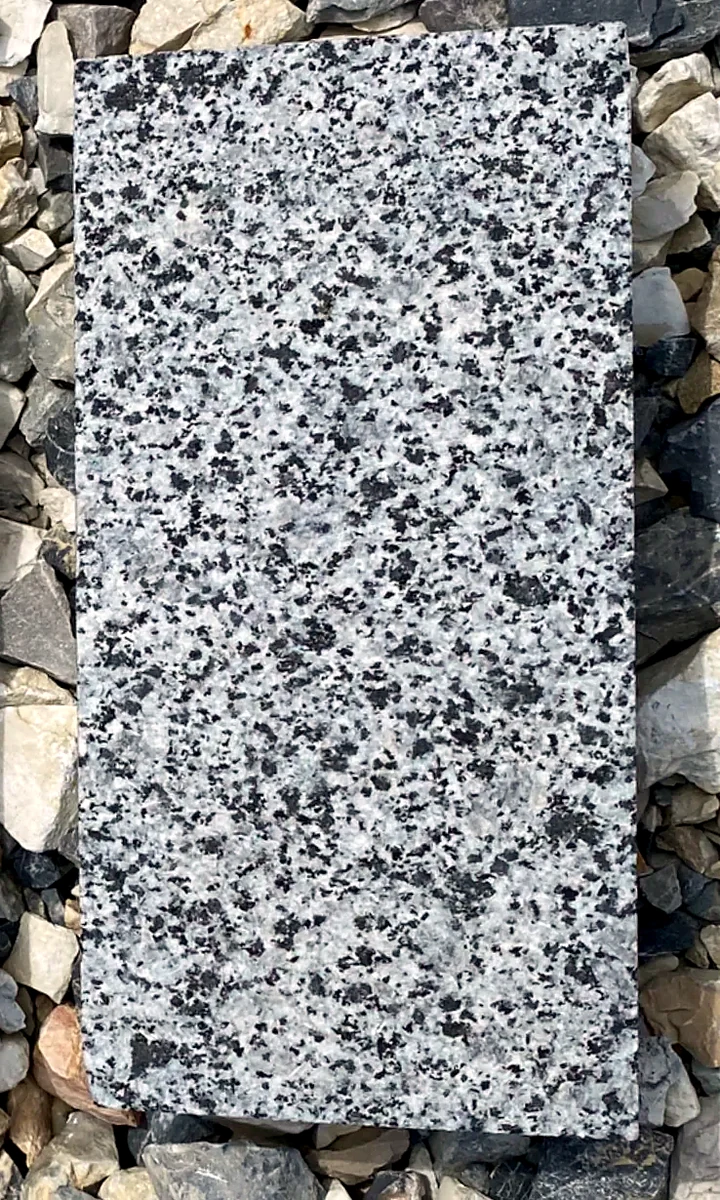
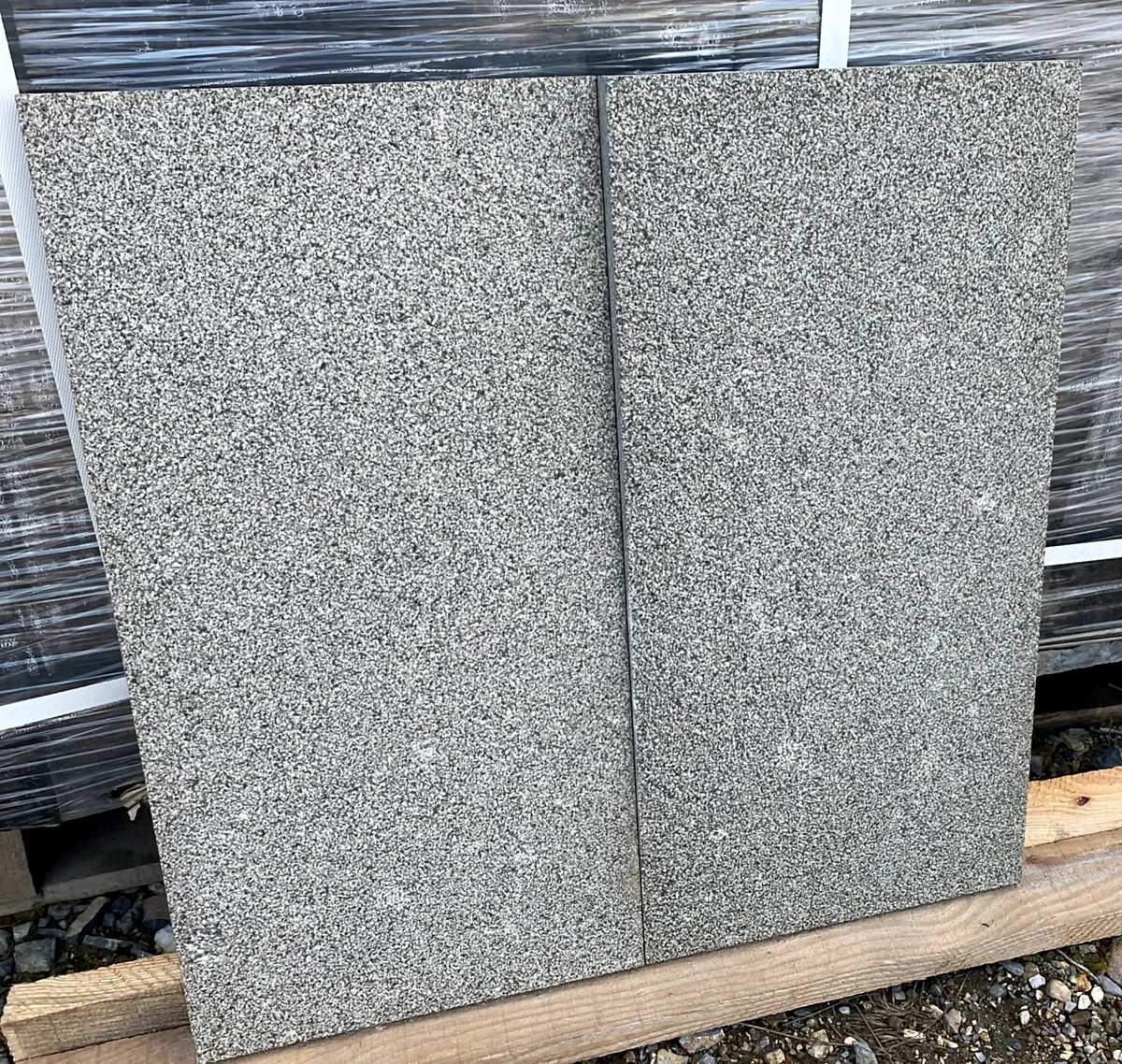
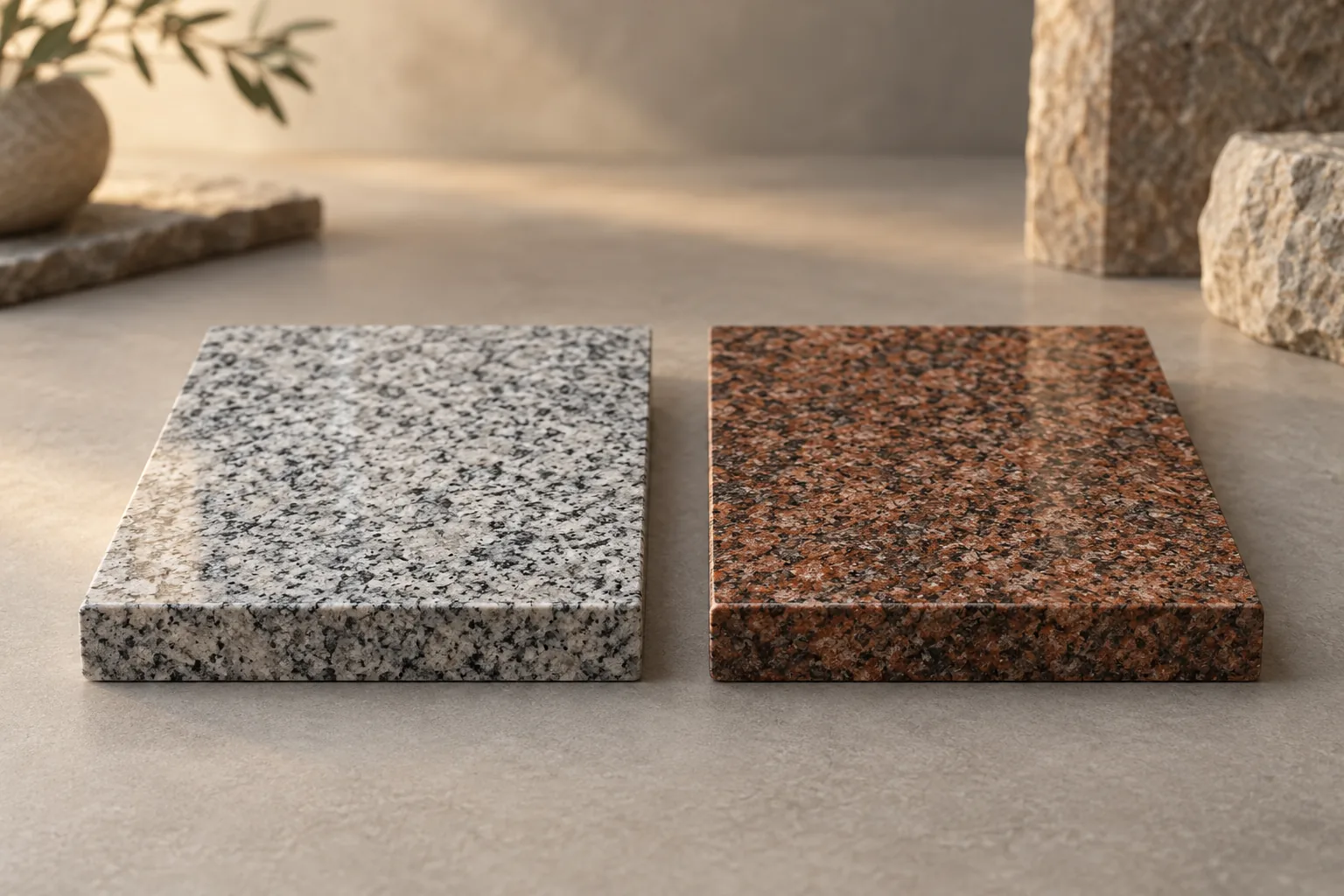
On the Ukrainian stone types page, Pokostivka is described as an even grey granodiorite with small dark inclusions, while Leznykivske is a red-pink granite with darker mineral grains. This is primarily a difference in colour and pattern rather than a scale of “better” and “worse”.
| Criterion | Pokostivka / Grey Ukraine | Leznykivske / Maple Red |
|---|---|---|
| Visual character | light grey, restrained, relatively even | red-pink, contrasting, accent material |
| Combination | neutral background for dark or coloured stone | independent accent or combination with grey/black |
| Polished appearance | fine grain and inclusions become clearer | red and pink tones appear deeper |
| Textured finishes | colour becomes quieter and matt | the saturated colour appears more restrained |
| Typical design role | broad planes, modern paving, steps | accent bands, façades, memorial and architectural details |
The table describes general appearance only. It does not set technical performance values, guarantee a shade or replace batch approval.
Pokostivka in a project
Pokostivka granite works well as a neutral base. Grey does not compete strongly with brick, concrete, timber or dark metal. In paving it forms a calm plane, while on steps and cladding it supports strict geometric designs.
It appears in products with different finishes: sawn paving, split elements, paving slabs and cladding plates. Sawing, flaming, honing and polishing change how the surface is read. A specification therefore needs more than “grey granite”: format and finish for every relevant face should be written down.
Leznykivske in a project
Leznykivske granite is selected when stone should be a visible part of the composition. Red and pink tones work in façade inserts, coloured paving bands, steps and memorial details. On a broad plane this colour influences the complete palette, so it helps to inspect a group of units rather than one small sample.
The material is also known in trade catalogues as Maple Red. A trade name helps identification, but the order should still state the deposit and current batch. NIKA GRAN does not claim ownership of quarries; the company agrees material and product manufacture for the particular project.
How the finish changes colour
Polishing creates reflection and reveals colour depth. Honing leaves the surface matt, while flaming gives it a texture. A split top creates relief that changes the light even between neighbouring units.
Compare samples with the same finish. Comparing polished Leznykivske with flamed Pokostivka shows two differences at once — stone and processing — and does not show how the materials will behave side by side.
For exterior work, inspect samples dry and wet. This is not a slip-resistance test, but it reveals how water changes the visible colour. Specified performance values need documentation for the exact stone and finish.
Combining the two materials
Grey Pokostivka and red-pink Leznykivske can be used together in paving or cladding. Simple approaches include a grey field with a coloured border, alternating bands, or accent steps. A layout is needed before ordering to count formats and avoid an accidental rhythm.
When combining them, agree: - matching or intentionally contrasting finishes; - thicknesses and finished levels; - joint widths; - locations of cut units; - current samples of both batches under the same light.
Information needed for a quotation
Describe the use, area, formats, finish and the intended role of colour — background or accent. Add a drawing or layout where the stones are combined. The quotation form can be used to send the brief for product and packing selection.
Frequently asked questions
Which granite is more practical for a courtyard?
Practicality follows format, finish, base, joints and maintenance. A deposit name alone cannot specify a stone for every courtyard.
Is the shade identical in every batch?
No. Natural pattern and shade vary between blocks, so a current physical sample is approved.
Can the deposit be identified from a photograph?
Not reliably. Lighting, white balance and surface finish change colour; a photograph is not proof of batch origin.
See also the guides to deposit and trade names and the difference between granite, gabbro and labradorite.
Sources and scope — checked 14 October 2026
- NIKA GRAN granite types — visible character and stated applications.
- Magmatic rocks, Encyclopedia of Modern Ukraine — rock origin and classification; it is not used here to assign unverified numerical values to these two materials.
- Maple Red / Leznykivske granite, GRANEX — additional trade usage of the name; supplier-specific characteristics are not transferred to NIKA GRAN batches.
This article supports visual and application choices. It is not a material passport, does not guarantee shade, and makes no quarry-ownership claim.