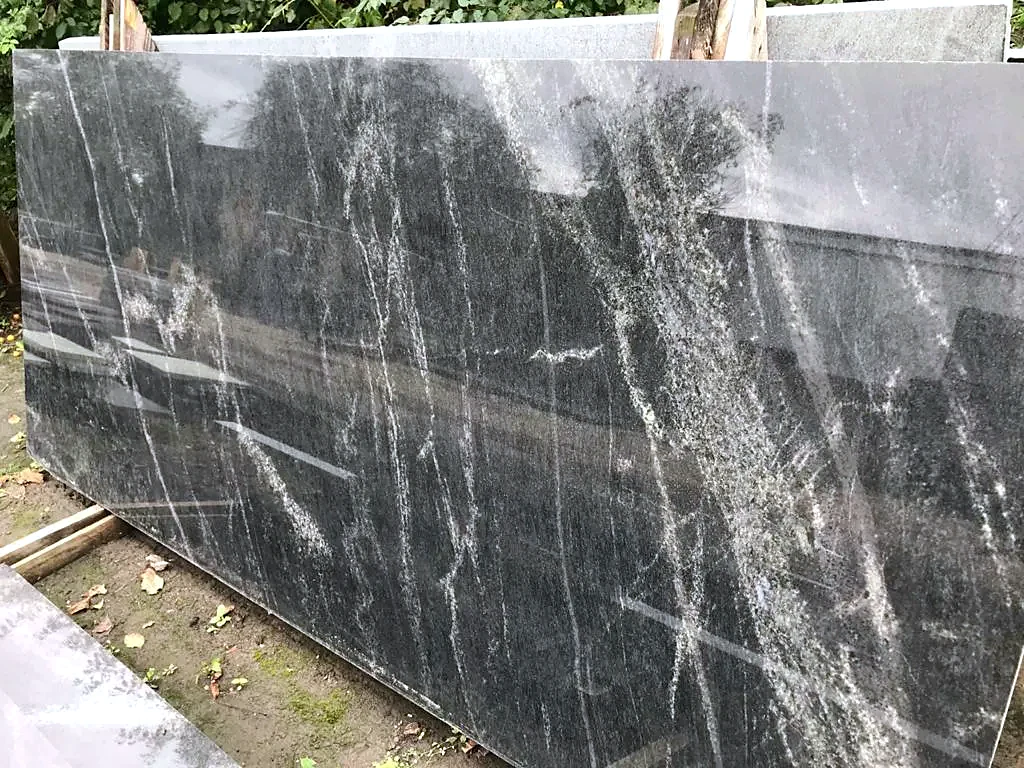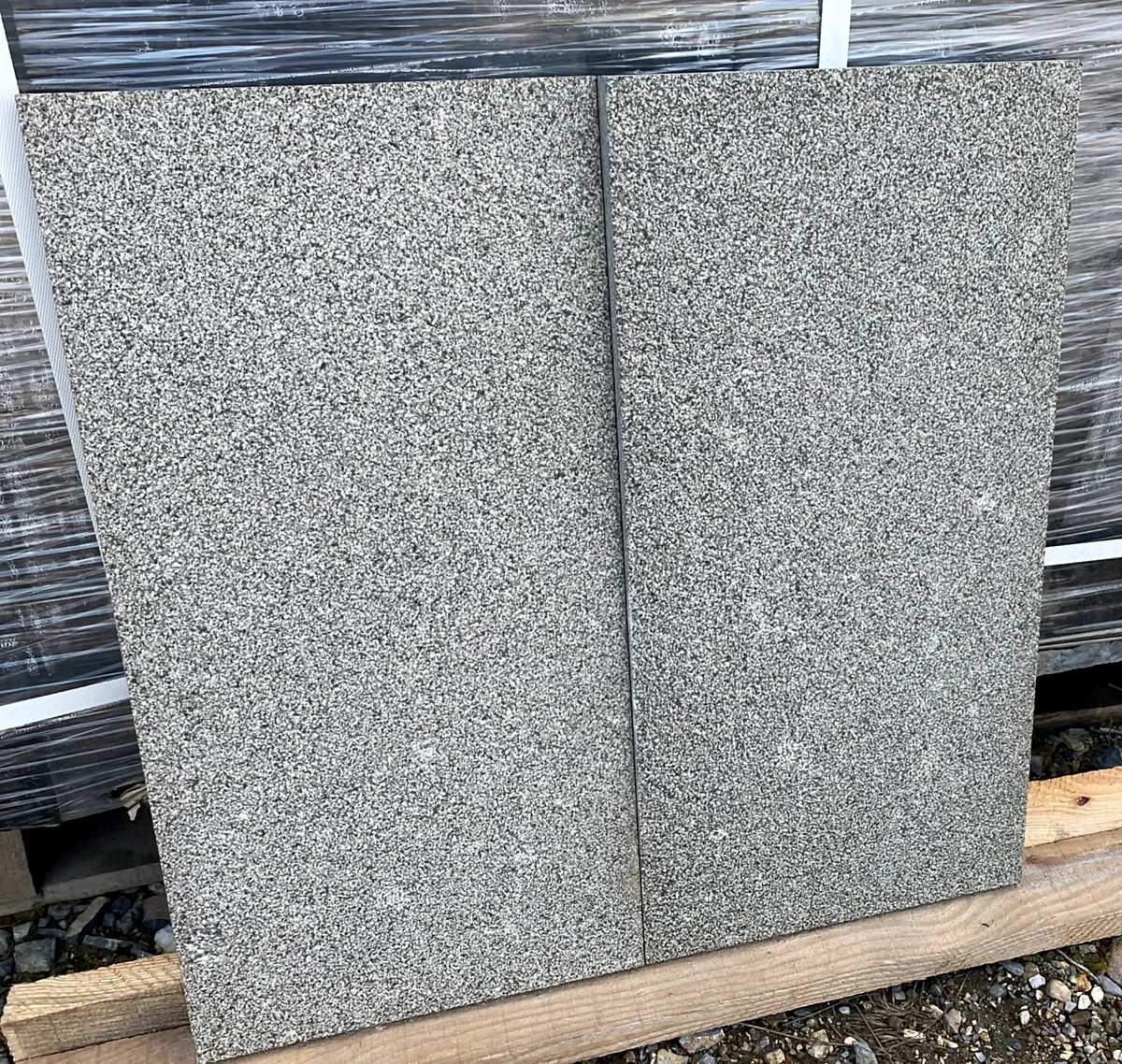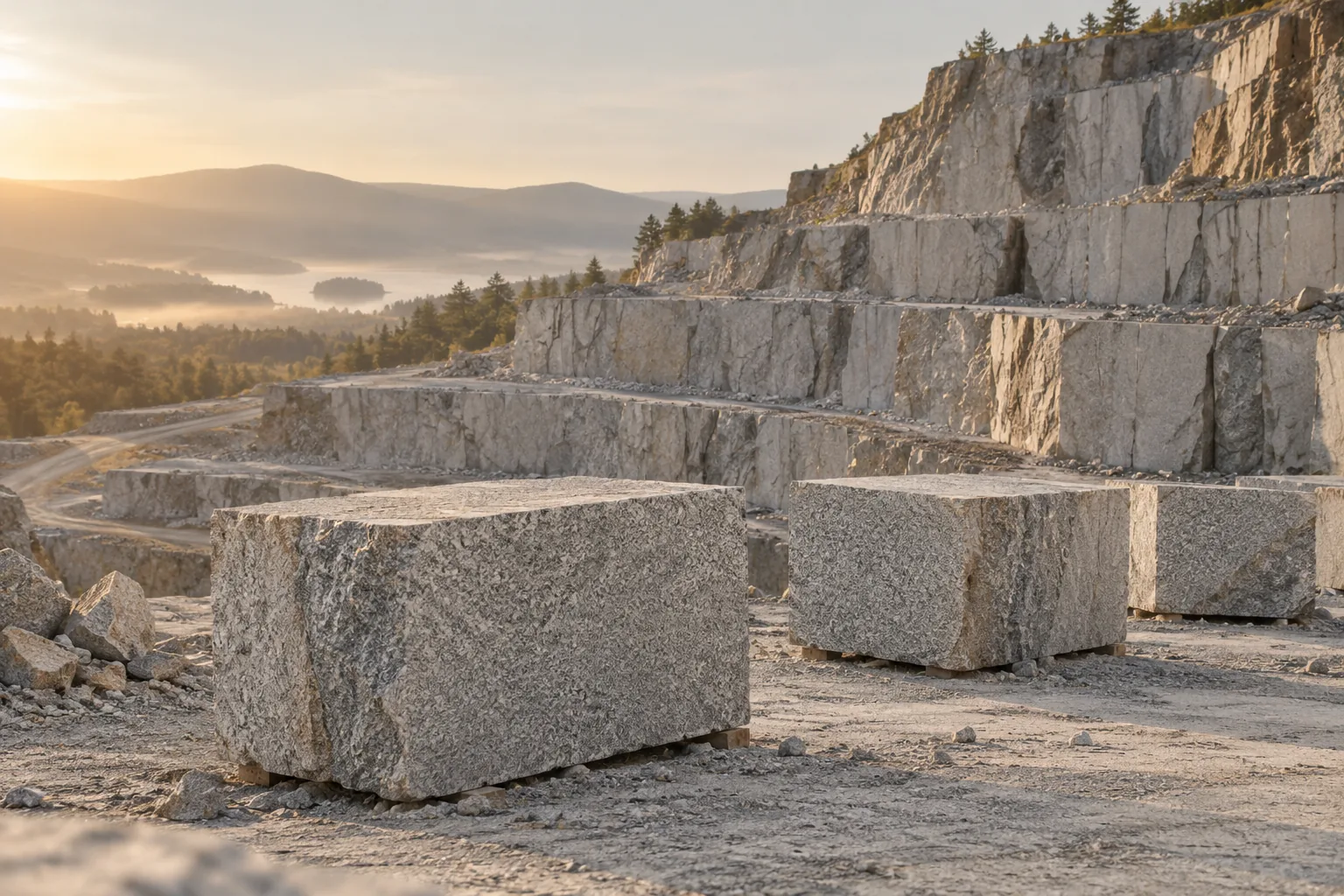
For a buyer, the practical question is not geography itself but how a deposit name relates to a specific batch: one stone may be sold under several trade names, and visually similar stones may come from different places.
What a decorative stone deposit is
Granite is an igneous rock formed when magma cooled and solidified in the Earth's crust. Its properties — grain size, density, mineral set — therefore belong to a specific geological body rather than to a recipe. That is why stone from different areas, even of the same type, can differ in colour and pattern.
A deposit is a natural accumulation of a mineral resource; its existence does not establish that extraction is currently active. A quarry is an open-extraction site. Check the status of a particular site and supply provenance against documentation. Its name usually derives from the nearest settlement or locality, while a trade name is a marketing label used by a seller. The two do not always match.
Why the same stone carries different names
Three situations occur in practice:
- One deposit, several trade names. Different suppliers promote the same stone under their own names.
- Similar names, different materials. The same trade name can be used for stone from different places, so relying on it alone is unsafe.
- One stone, several grades. Within a deposit, areas differ in shade and grain.
Order against a specification — deposit, format, finish, thickness, batch — rather than a name.
What to check before ordering
- Sample. Approve the shade against a physical sample from the current batch, not a screen image.
- Batch origin. Ask which deposit the delivered stone actually comes from.
- Supply consistency. On a large project, confirm the supplier can repeat the shade in later batches.
- Material documentation. Projects with specified performance values need evidence for that exact stone and finish.
A deposit name is not a performance guarantee. Where strength, water absorption, abrasion or slip resistance matter, they are confirmed by testing of the specific material rather than a general description.
How this works in our catalogue
Materials shown on NIKA GRAN are described with both deposit and trade name — for example Pokostivka stone as Grey Ukraine, or varieties from other Zhytomyr-region deposits. A catalogue material name is not evidence of quarry rights or the origin of a particular batch. This article does not determine who carries out extraction: clarify the supplier, fabricator and extractor roles and batch documents when ordering.
Explore granite types and deposits and products by material.
Comparing supplier offers
| What to compare | Why it matters |
|---|---|
| Deposit and grade | determines shade and pattern |
| Format and thickness | affect layout and construction |
| Surface finish | determines appearance and behaviour |
| Batch | stone from different batches may differ |
| Packing and logistics | separate quotation lines |
| Lead time and delivery method | affects the project schedule |
Frequently asked questions
How many granite deposits are there in Ukraine?
Many, spread across several regions. For a buyer, the origin of your specific batch matters more than a total count.
Does the deposit affect the price?
Yes — different deposits and grades carry different costs. Compare quotations against the same specification.
Can a deposit be identified from a photo?
Not reliably. A photograph depends on lighting and finish, so visual identification is not a basis for a specification.
Sources and scope
- Magmatic rocks, Encyclopedia of Modern Ukraine — origin and classification of rock types.
- NIKA GRAN granite types — our own description of materials and applications.
This article explains general principles; it is not a geological determination for any particular batch.