What geological sources establish
The Leznykivske material name here follows the NIKA GRAN catalogue. The linked special-permit document is not used as evidence of current extraction rights or batch properties: its full contents could not be reliably read during this review. Confirm geological identity and the provenance of an actual supply with separate documentation, not a name or photograph.
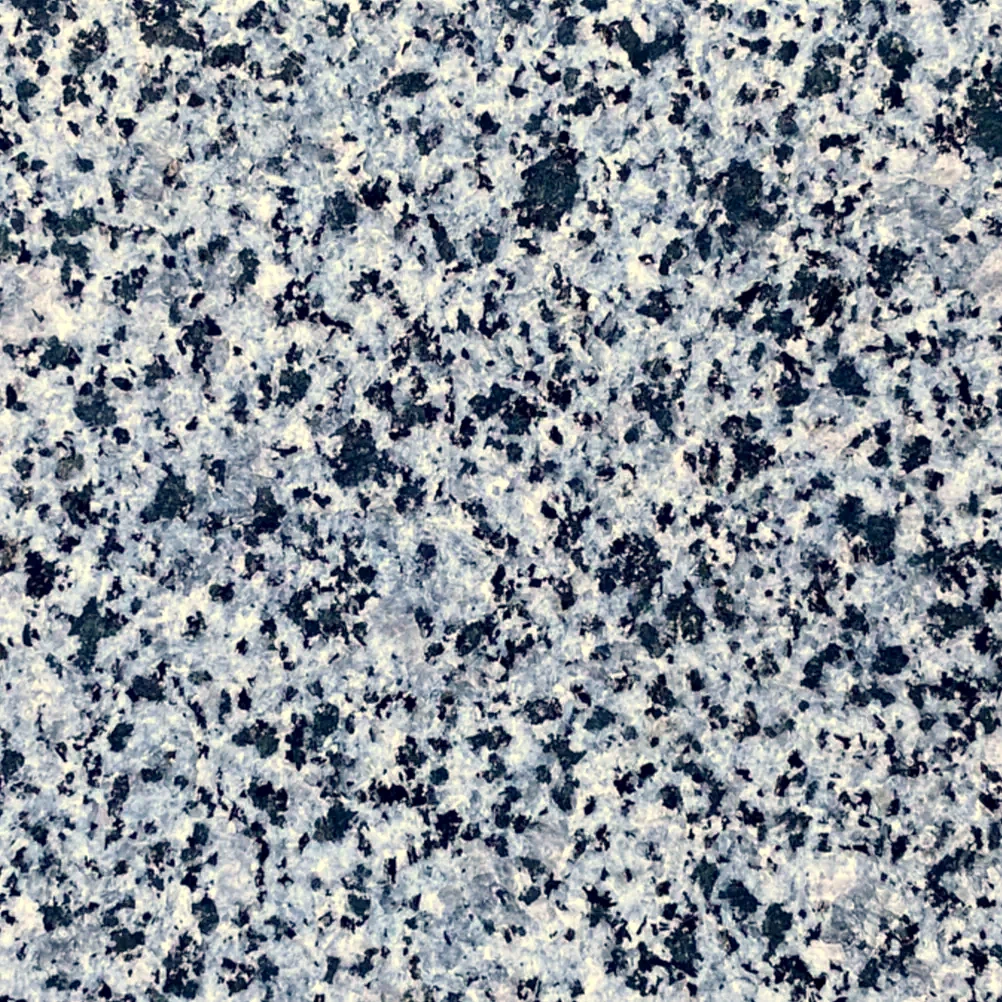
The Encyclopedia of Modern Ukraine explains the origin of igneous rocks. The practical point for a buyer is that natural structure is not a printed decoration: variation in grain and tone is a material characteristic that should be described in the specification.
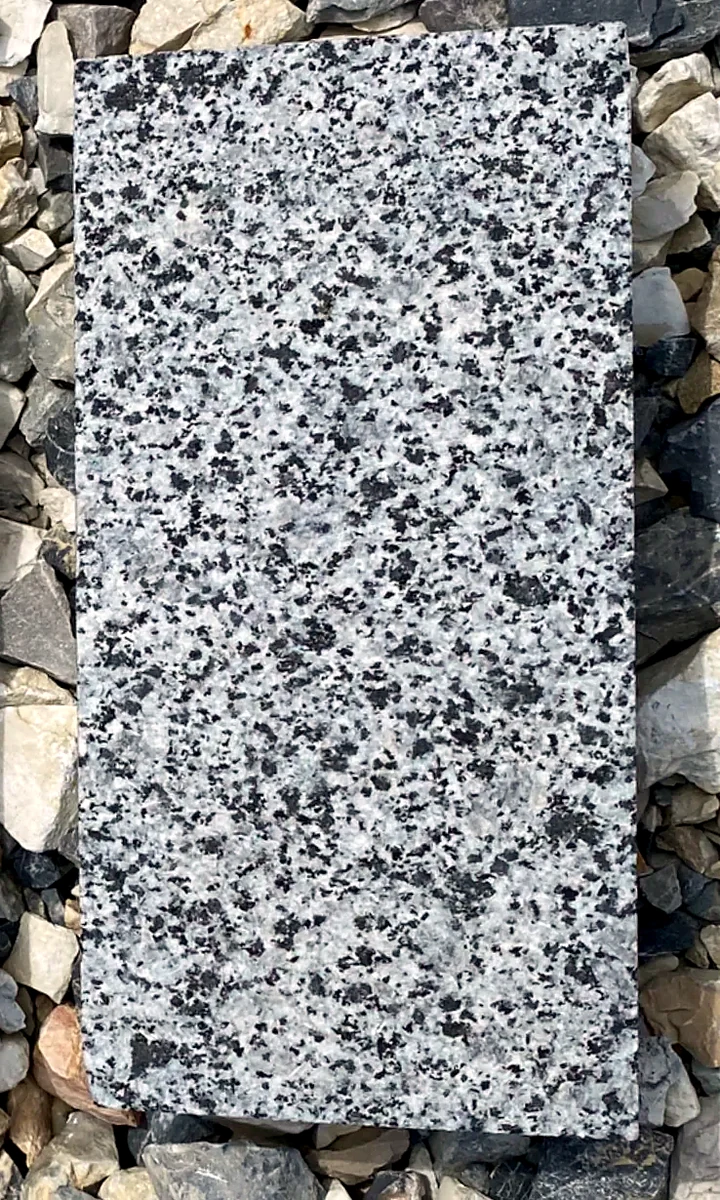
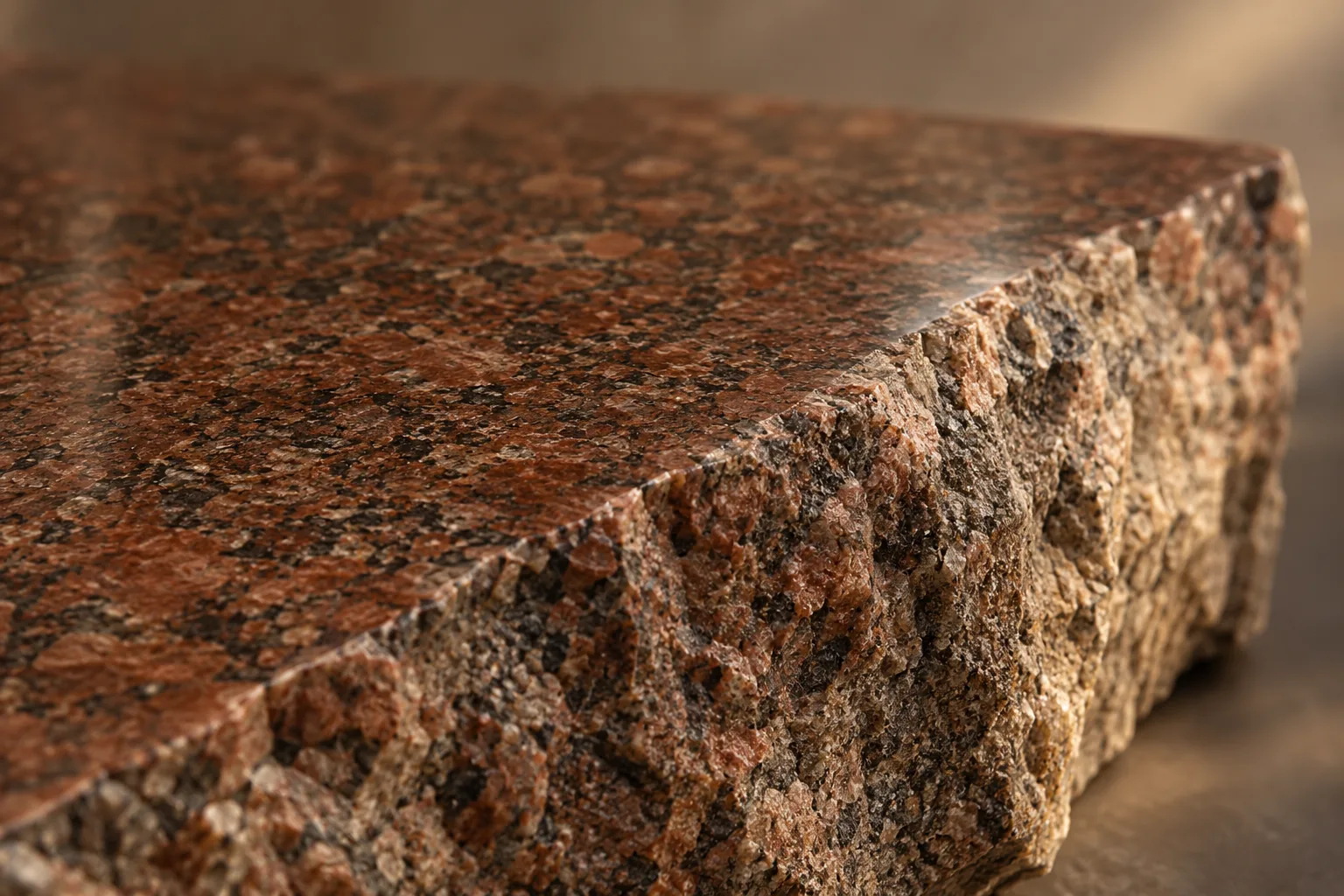
The Leznykivske material page and stone range show an owner photograph of a physical NIKA GRAN sample. It records one sample in particular lighting, not the full possible range of batches. For comparison with a more neutral grey character, view the Pokostivka material page.
| Question for the sample | Why it matters | Record in the order |
|---|---|---|
| How warm is the red tone | screens and lighting change colour | approved physical sample |
| How strong is grain contrast | larger units reveal more pattern | permitted dark and pale inclusions |
| Which finish is used | treatment changes light reflection | polished, honed, thermal or other |
| Are formats combined | different areas display stone differently | product list and adjacency layout |
| How is the batch sorted | absolute identity is not expected | permitted variation range |
Leznykivske material in different products
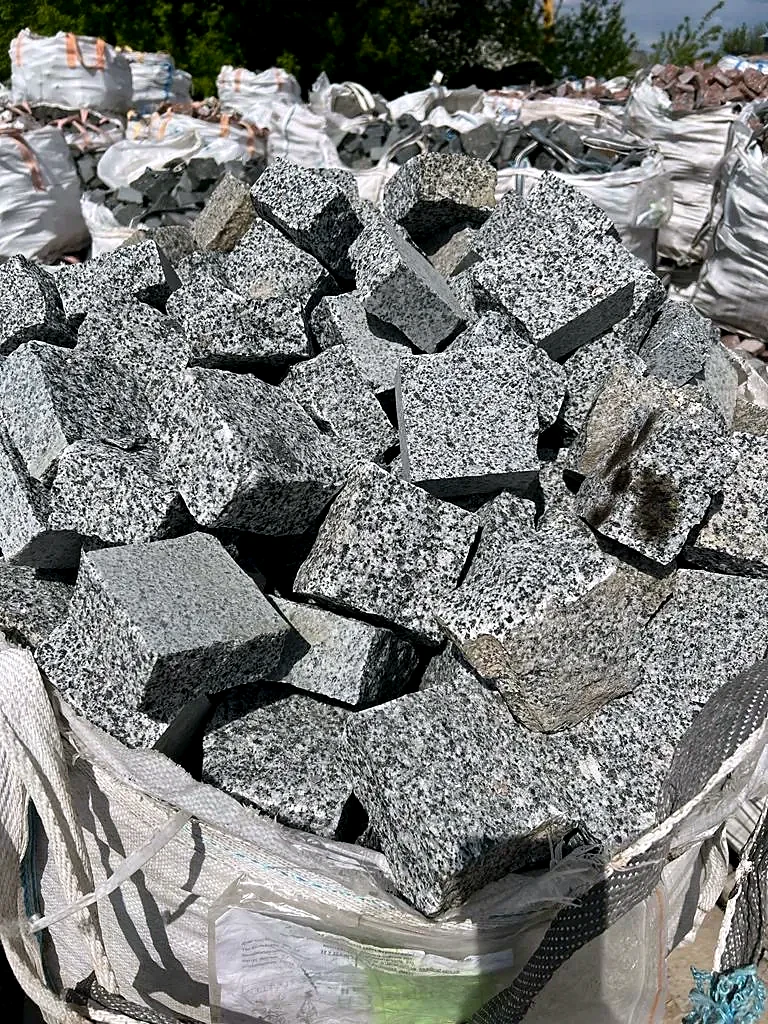
On sawn paving, the warm tone is read through regular geometry. Split setts have a relief fracture that scatters light and may appear lighter than a polished surface. Paving slabs display larger areas of pattern. For cladding plates, direction, alternation and adjacency matter, while plates and slabs should be inspected at more than one point.
Do not select the material only because a name or marketing description says “red”. Steps, paving, façades and interiors use different finishes, and their appearance must be approved separately. This guide does not publish numerical physical or mechanical properties because such numbers cannot be assigned to an order without a relevant test report for the actual product.
Checklist before dispatch
- Confirm the commercial name and provenance of the current sample.
- Compare the sample dry and damp only as a visual check, not a laboratory test.
- Approve the finish for every product type.
- For a large area, inspect several units from different packages.
- Record whether contrasting grains and saturation changes are acceptable.
- Do not treat colour approval as an availability guarantee; confirm the batch separately.
The guide to Ukrainian deposits gives general context. Pokostivka or Leznykivske granite compares samples and use rather than inventing a “better/worse” ranking.
Frequently asked questions
Is Leznykivske granite always bright red?
No. Tone and saturation depend on the natural batch, finish, lighting, moisture and screen settings. A physical current-batch sample is required.
Do a polished plate and split sett look the same?
No. Polishing intensifies contrast, while natural fracture scatters light and creates a different surface. Approve a separate sample for every finish.
Does this page confirm that the material is in stock?
No. It explains selection and shows a physical sample. Availability, quantity, price, timing and the specific batch are confirmed in response to an enquiry.
View the Leznykivske sample · Request a current physical sample
Sources
- Encyclopedia of Modern Ukraine: “Igneous rocks” — general geological context.
- State Service of Geology and Subsoil: special-permit document for the Leznykivske deposit — deposit name in an official document; not evidence of NIKA GRAN ownership or product availability.
- NIKA GRAN Leznykivske material — range and owner photograph of a physical sample.
data_asof: 2026-10-14. Shade, pattern, finish, availability and order conformity must be confirmed against a physical sample from the current batch.
Editorial clarification, 15 October 2026: sources are used only within verified content; the unverified handbook citation is not used.