Why “grey” or “red” is not a full specification
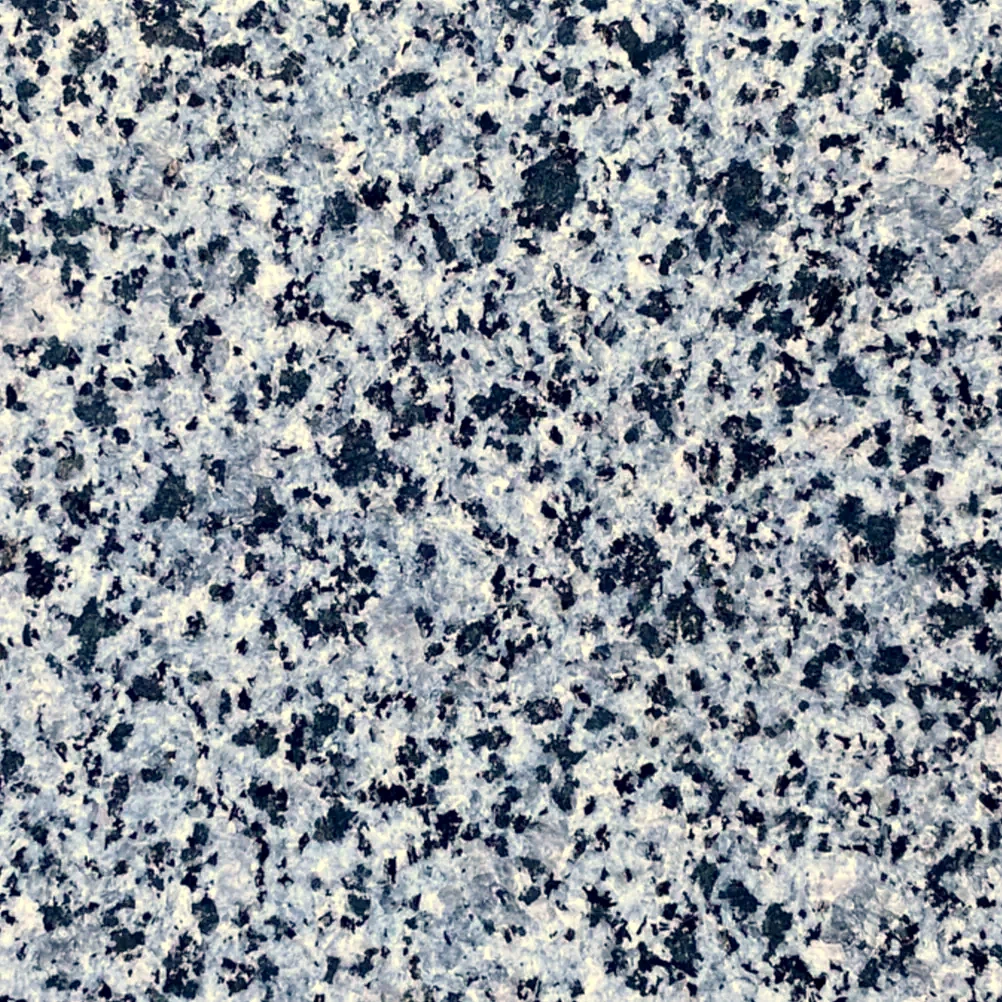
Granite belongs to the family of igneous rocks. Its visual pattern is formed by different mineral grains, and their proportion and distribution in a natural body are not equivalent to an industrial paint with a fixed code. The Encyclopedia of Modern Ukraine explains igneous-rock origins. This supplies general geological context, not evidence for the characteristics of a sale batch.
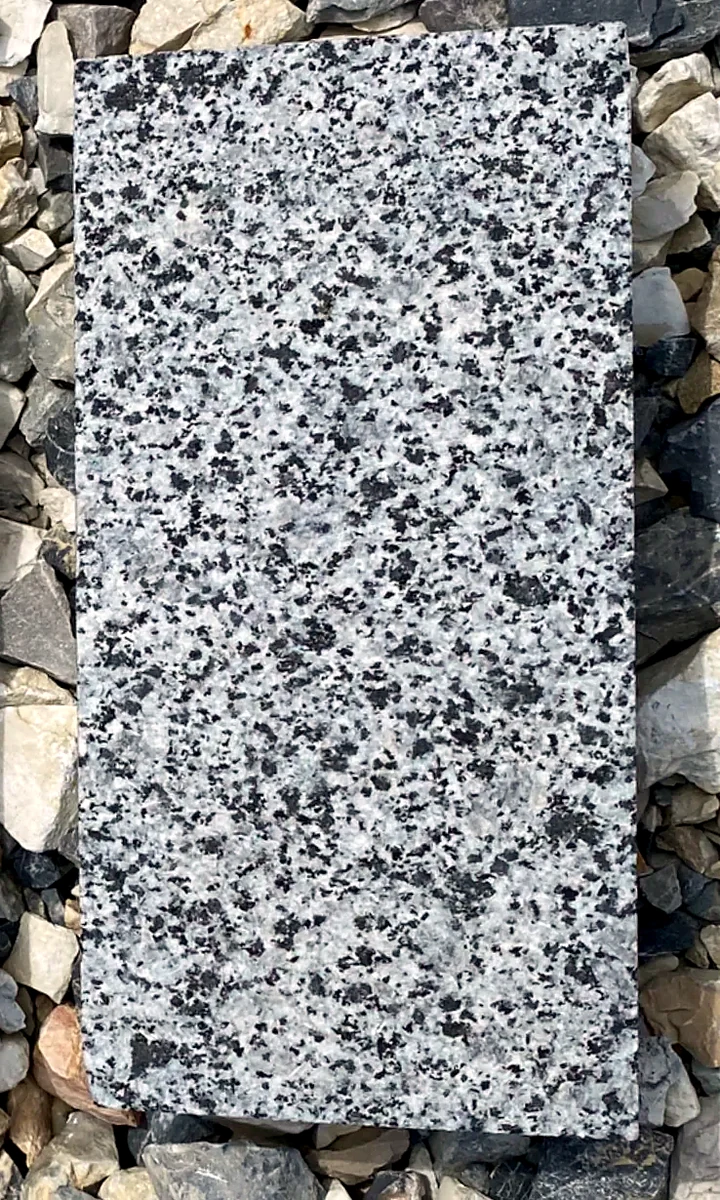
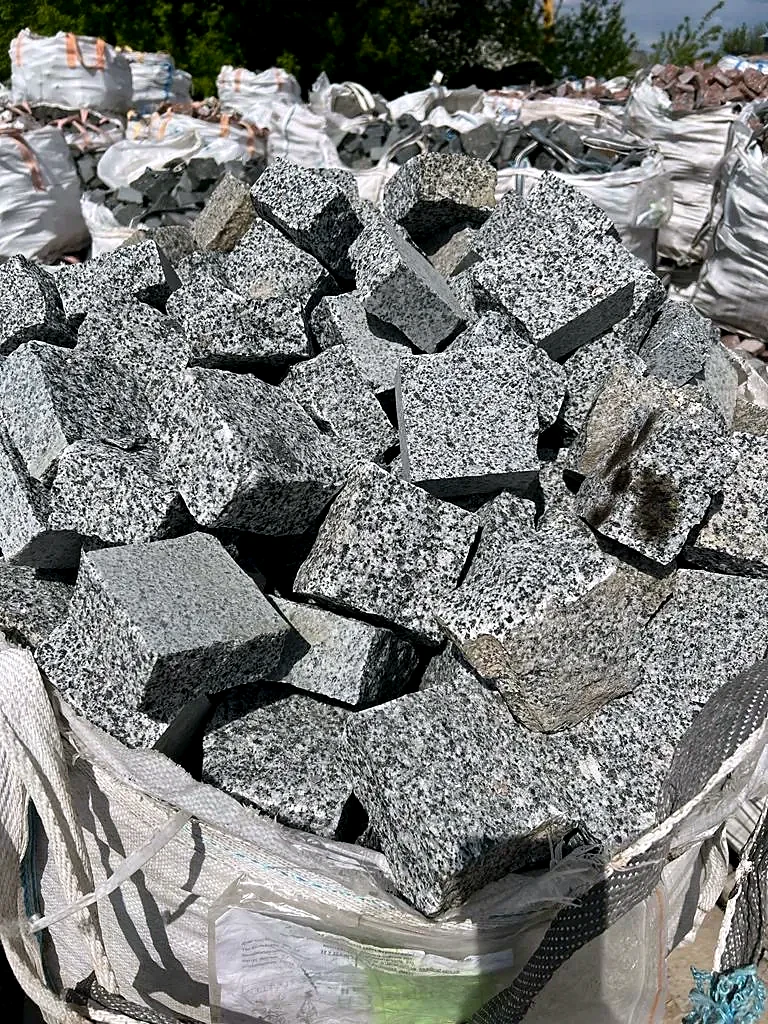
The NIKA GRAN stone range shows physical samples, including Pokostivka material and Leznykivske material. Photographs help compare general character, but screen calibration, white balance and compression affect perception.
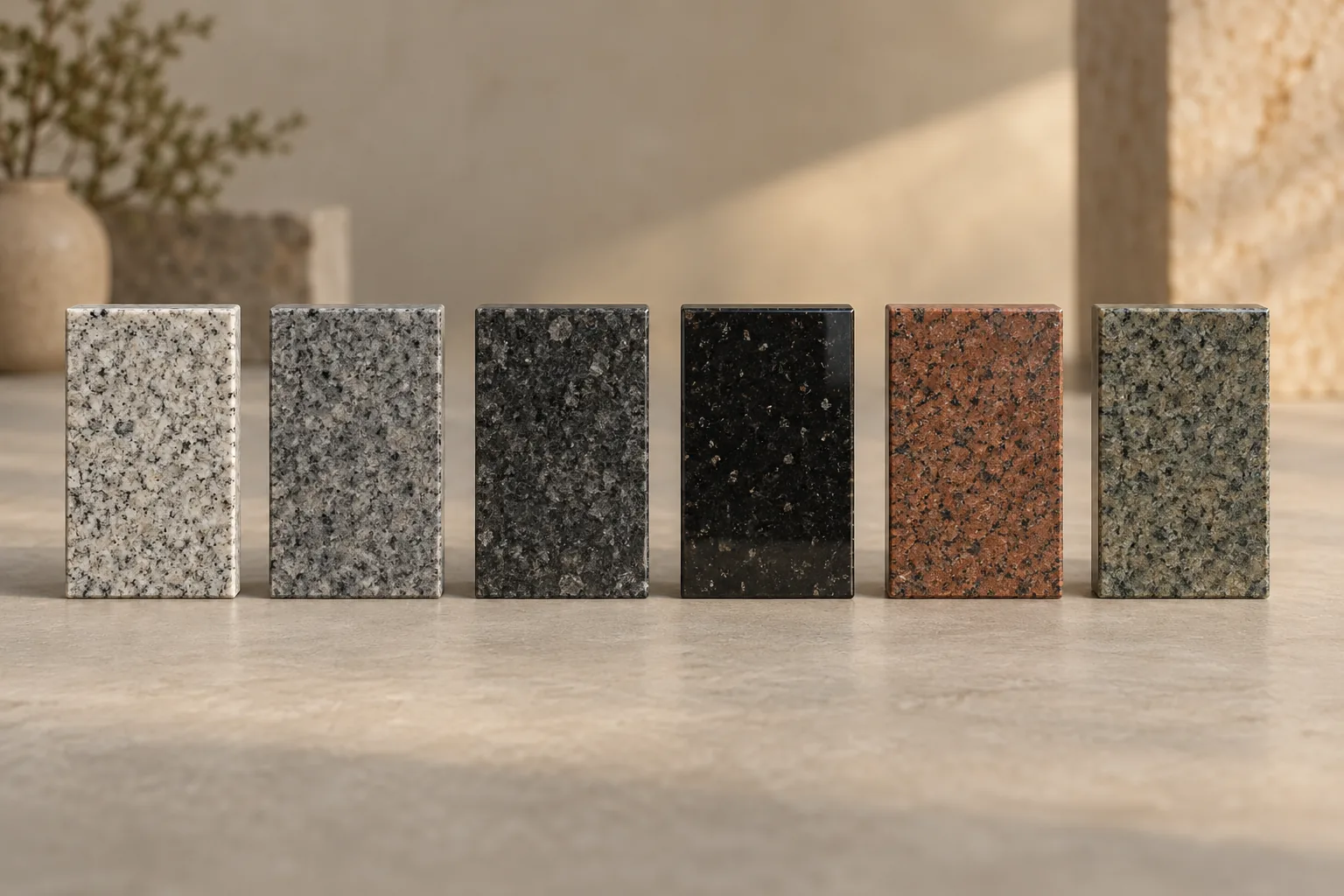
| Visual group | Typical character | What must be checked |
|---|---|---|
| Grey | light- or medium-grey field with dark and light grains | current sample and finish contrast |
| Red and pink-red | warm field with dark or pale inclusions | batch consistency and pattern direction |
| Dark | black or very dark-grey perception | whether the material is granite, gabbro or labradorite; finish |
| Greenish-grey | complex olive or greenish nuance | physical sample and image provenance |
| Mixed | pronounced patches, veins or contrasting grains | permitted variation between units |
How finish changes perception
A polished surface usually intensifies contrast and apparent pattern depth. A honed surface looks quieter. A thermal or relief finish scatters light and may appear lighter. A split face shows a natural fracture and does not reproduce a polished sample. The same material can therefore look different as sawn paving, split setts and paving slabs.
For a façade or plinth, compare the sample in lighting similar to the project. Cladding plates and granite plates and slabs show different visual areas: natural variation is more obvious on a large plate than on a small sett.
A practical batch-approval protocol
- Define the product, format and finish before choosing a shade.
- Request photographs or video of the current material rather than an archived marketing image.
- Approve a physical sample with the required finish.
- Record acceptable variation between units and how contrasting grains are treated.
- For large areas, make a trial layout or inspect units from several packages.
- Do not rely on commercial labels such as “black”, “red” or “green” without identifying the stone and batch.
The guide to Ukrainian granite deposits explains the origin of names, while the Pokostivka and Leznykivske comparison helps formulate questions for a sample. Neither page guarantees an exact shade without inspecting the batch.
Frequently asked questions
Which Ukrainian granite is the blackest?
The commercial perception of “black” can refer to different natural rocks. Identify the material, finish and current sample; this article does not establish a blackness ranking.
Will every paving unit have the same colour?
Natural stone varies. Consistency depends on the batch, sorting, format and finish. Record the permitted range in the specification and inspect it before dispatch.
Can colour be approved from a photograph alone?
A photograph supports preliminary selection, not a guarantee. Final approval should use a physical current-batch sample in lighting similar to the intended setting.
Explore the stone range and request a physical sample.
Sources
- Encyclopedia of Modern Ukraine: “Igneous rocks” — geological context for rock formation.
- NIKA GRAN stone range — range and owner photographs of physical samples; not an independent source of geological properties.
data_asof: 2026-10-14. Exact shade, pattern, availability and batch consistency must be confirmed against a physical sample for the individual order.
Editorial clarification, 15 October 2026: sources are used only within verified content; the unverified handbook citation is not used.