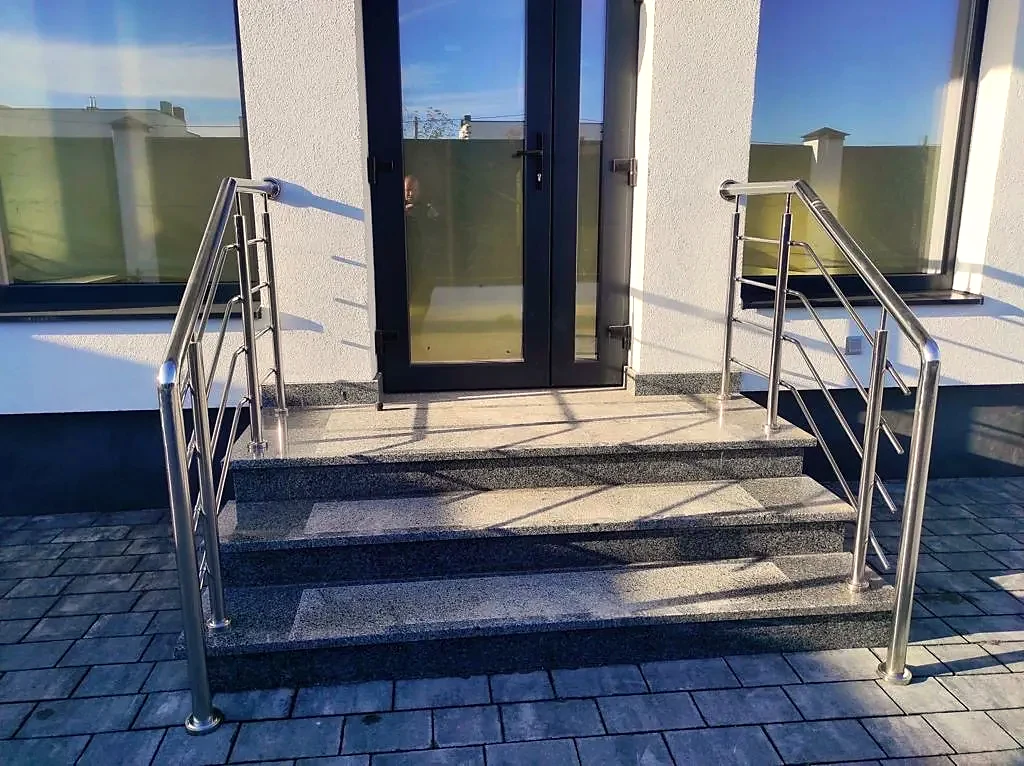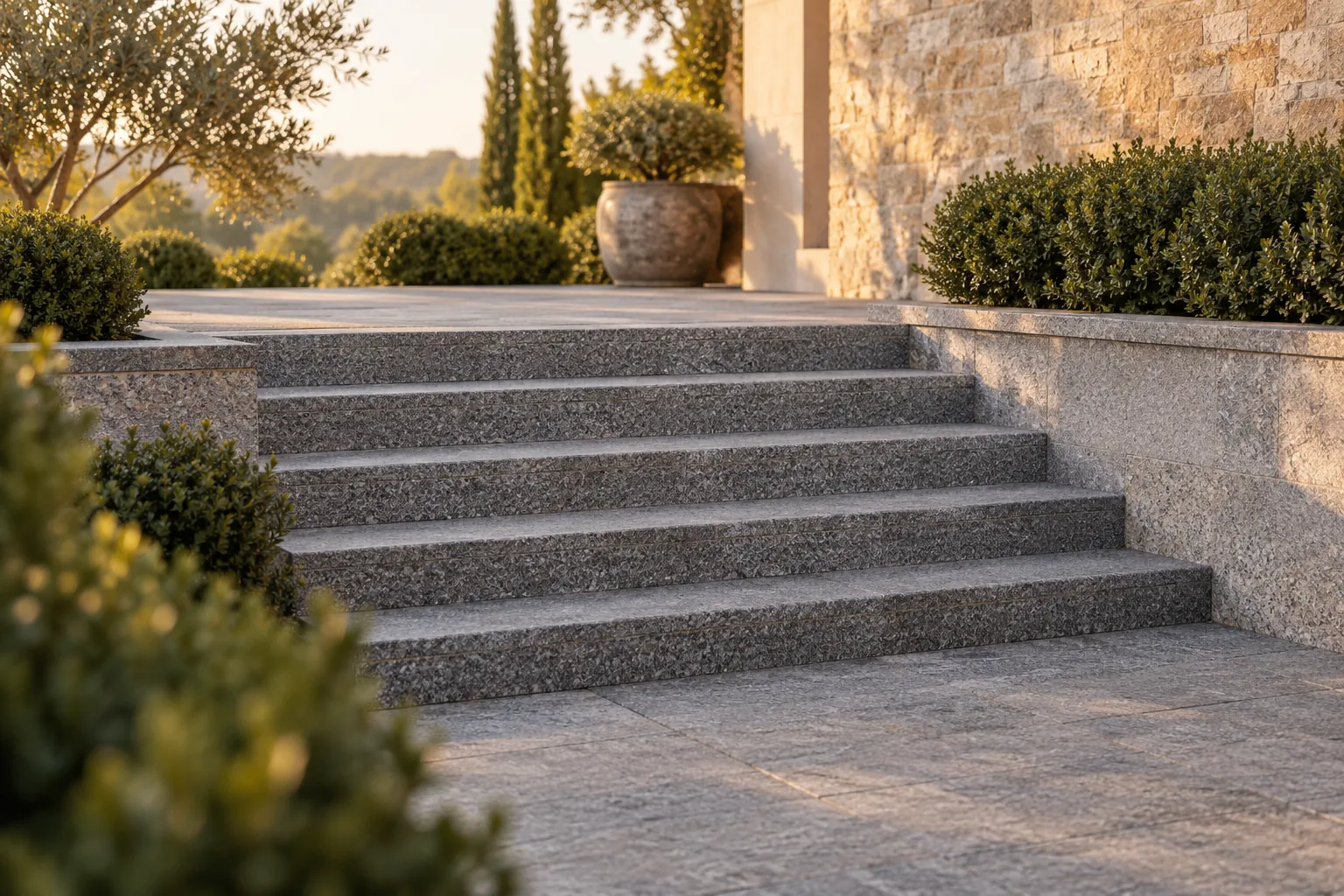
Polishing suits interior stairs where there is no rain or ice. Dimensions, gradient and construction are set by the project, not by a general rule.
What affects the choice
Tread finish. Flaming creates a textured surface, sawing gives even geometry with saw marks, splitting gives relief. Each behaves differently underfoot and handles water differently.
Edge detail. On outdoor steps the front edge works together with the riser: it shapes the visible line of the step and its safety.
Drainage. Standing water increases risk; finish and drainage need joint assessment rather than an unsupported ranking. Gradient and run-off belong in the design.
Base. Stone works with its base. If the base deforms or settles, no finish will compensate.
Climate. Where temperatures repeatedly cross zero, the freeze-thaw behaviour of the construction and the absence of standing water matter most.
Practical decisions
| Element | Agree before production |
|---|---|
| Tread | finish, thickness, edge overhang |
| Riser | material and finish, height |
| Landing | gradient, run-off direction |
| Outer steps | shape, radius, junction to wall |
| Joints | width, filling, sealing where relevant |
We produce treads, risers and landings and entrance groups in a single material. Installation is carried out by a separate contractor unless agreed otherwise in the order.
What to avoid
- Setting thickness from a photograph or a blanket rule.
- Choosing a polished finish for steps that freeze in winter.
- Leaving wide outdoor joints without a considered filling.
- Expecting the finish to compensate for base errors.
Do not read “flamed” as a guarantee against slipping in every condition: water, ice, contamination and gradient still matter. Where a project specifies slip-resistance values, they are confirmed by documentation for the exact material and finish.
How to clean granite steps outdoors
First remove loose sand, leaves and dirt with a soft brush. For routine washing, use water and a neutral cleaner approved by its manufacturer for the actual stone, finish and joints. Follow dilution and rinsing instructions. Do not leave cleaning residue or water where it can form a slippery film or freeze; restrict access while cleaning.
Identify the cause before treating a persistent mark. Green growth, grease, rust and cement residue require different approaches. Do not mix chemicals or apply acids and abrasives at random. Test a compatible product in an inconspicuous area and refer difficult contamination to a specialist. General stone-care advice does not prove that any particular preparation is safe.
Joints, water and seasonal inspection
- Before cold weather, check drainage and places where water collects.
- Inspect edges, cracks, joint filling and loose units. If a step moves or has a hazardous chip, restrict access and arrange inspection rather than cosmetic cleaning alone.
- Inspect joints and connections again after winter. Do not conceal damage with sealant before identifying the cause.
- Select any de-icing product for compatibility with the stone, joints and metal components. This article specifies no universally safe salt or application rate for all steps.
Can a pressure washer be used?
Do not select pressure, nozzle or working distance from the label “granite”. Consider surface condition, joints, substrate and any coatings, and obtain guidance from the installer or system manufacturer. Until compatibility is confirmed, use gentle manual cleaning. This guide does not prescribe a universal pressure-washing setting.
See also basic stone-care principles and surface finishes. Interior-care advice does not automatically apply to frost, ice and exterior joints.
Frequently asked questions
Which finish is best for outdoor steps?
There is no single answer. Flamed or sawn surfaces are usually considered, but the decision follows the project and climate.
Can labradorite be used for steps?
Yes, with a suitable finish. Choose the texture particularly carefully for wet areas.
Do you make steps to size?
Yes, we produce items from drawings or sketches. Dimensions, edges and finish are agreed before production starts.
Explore architectural products or send drawings for a quotation.
Sources and scope
- Granite Setts UK: finishes — terminology of surface finishes.
- Use Natural Stone: common cleaning mistakes — general care principles.
- NIKA GRAN steps — range and stated finishes.
Project decisions, dimensions and specified performance values are set by the designer.
Editorial addition, 15 October 2026: cleaning and seasonal inspection. The source supports general care principles; actual exterior-step cleaning methods require confirmation.