What the decision includes
| Question | Why it matters |
|---|---|
| Which vehicles use the drive | a passenger car and freight vehicle impose different loads |
| How often traffic occurs | frequent movement differs from occasional parking |
| What the ground is like | weak or wet ground needs different preparation |
| Where water drains | standing water weakens the base and creates ice |
| Where vehicles brake and turn | horizontal loads are higher there |
| Which stone format is used | small setts and large slabs behave differently under a wheel |
Choosing the product
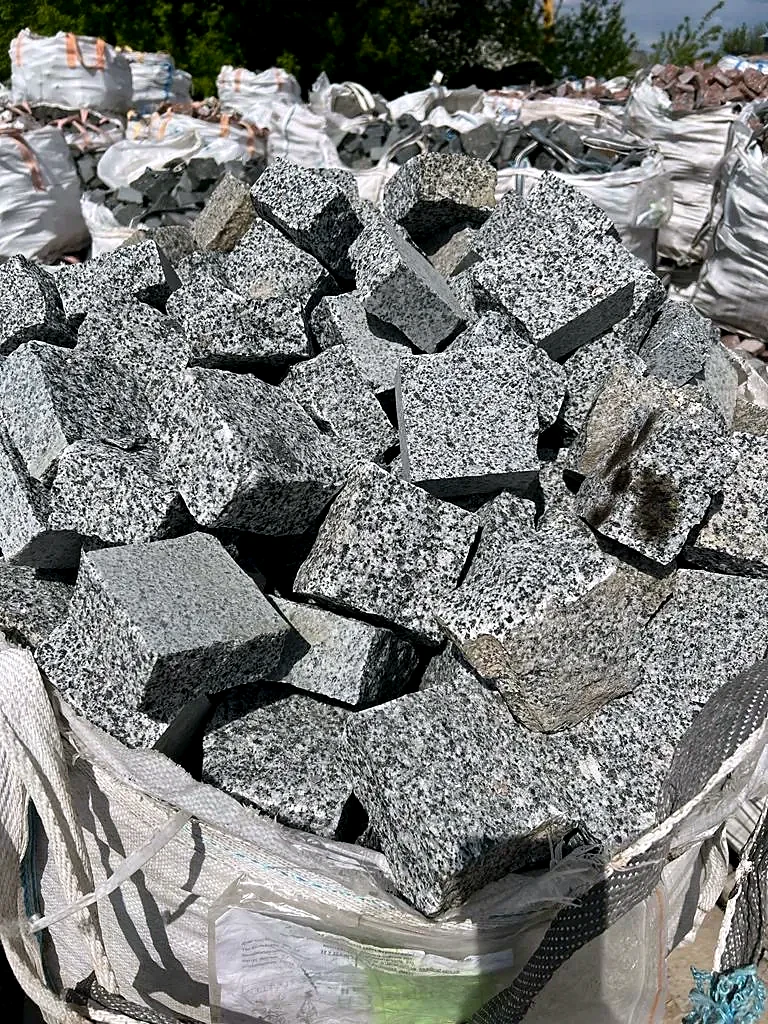
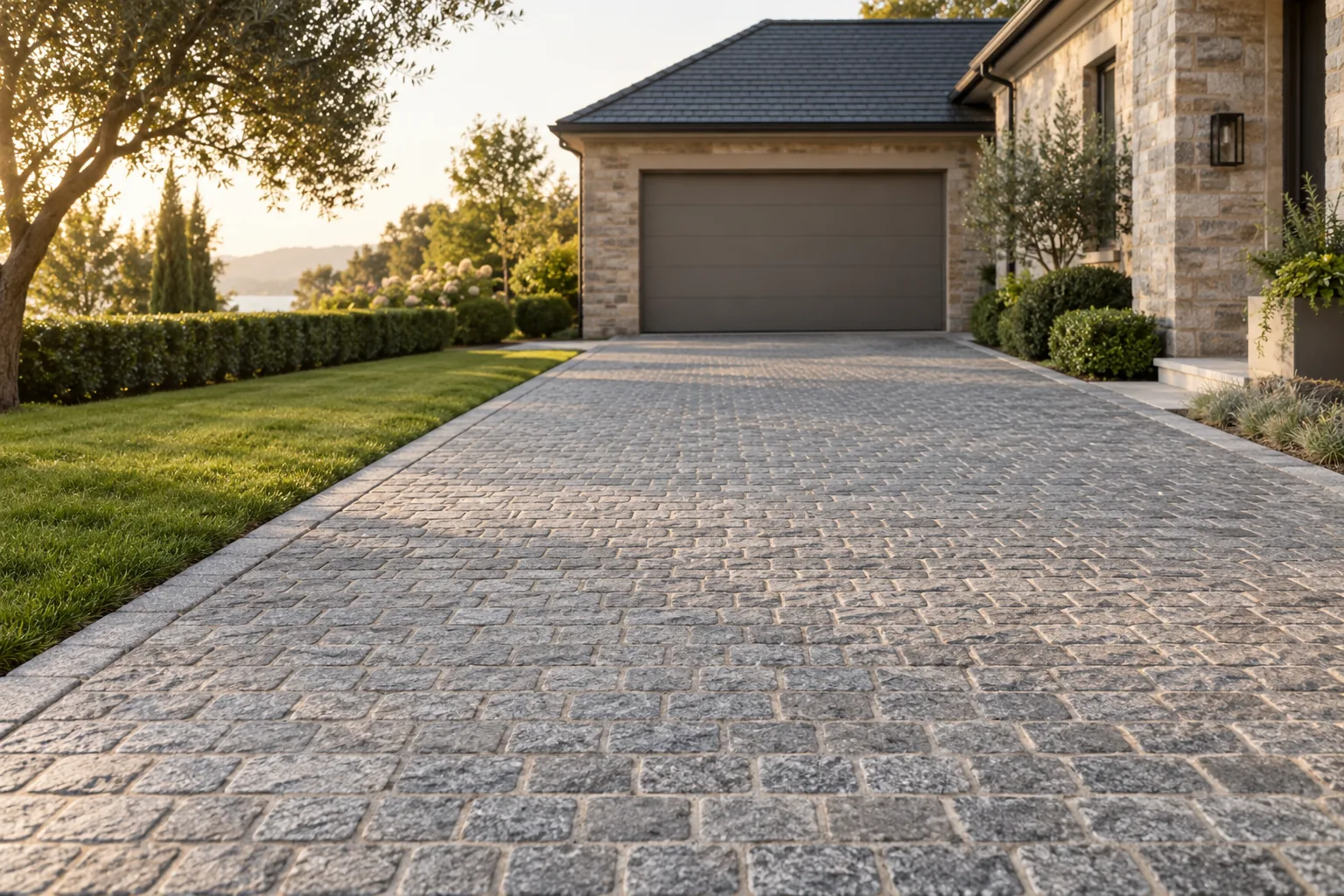
Driveways can use split setts, sawn-and-split paving or format paving slabs. Sawn sides produce more precise joints, split tops give relief, and slabs create larger planes.
No article can assign a universal thickness: the same stone behaves differently on a firm and weak base. The designer or responsible contractor records the decision.
Drainage and edge restraint
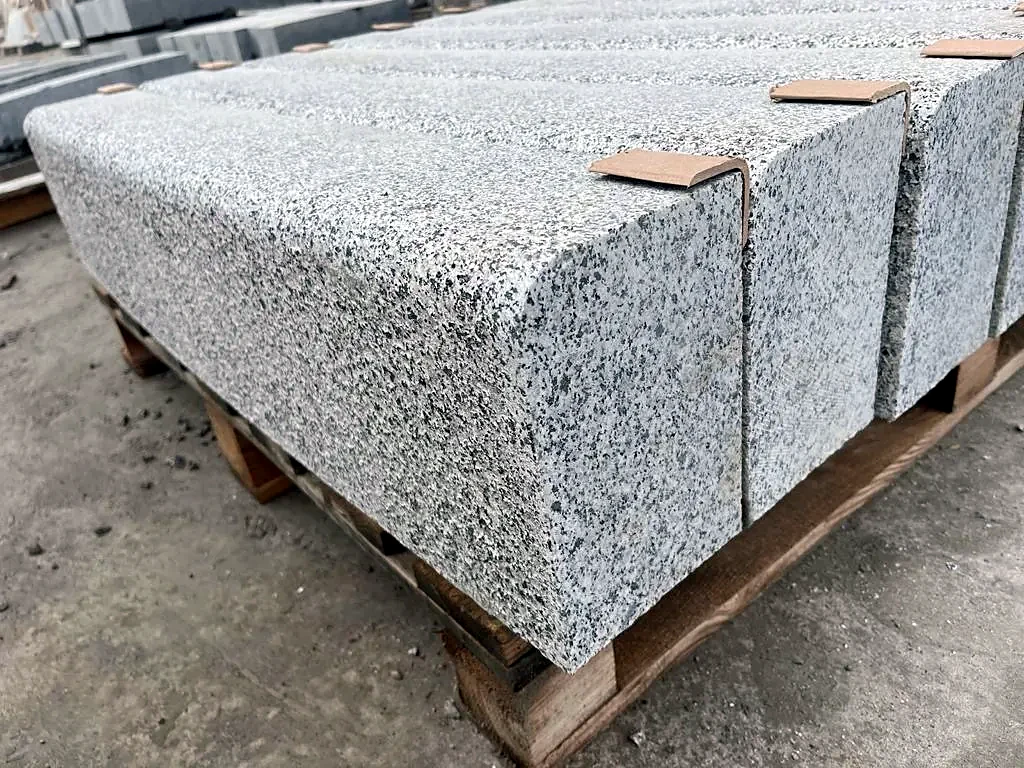
Paving should carry water away from buildings and avoid wheel-track puddles. Gradient, channels and discharge points are designed before laying. Driveway edges are restrained by granite kerbs or another designed construction so units do not spread under load.
Information needed for a quotation
- Site plan with dimensions and gates.
- Vehicle types and traffic frequency.
- Ground and existing-base information.
- Desired stone, format and finish.
- Drainage arrangement.
- Address, access and unloading conditions.
We quote stone products, format and packing; installation and base construction are agreed separately with the works contractor.
Checklist for the designer and contractor
Before selecting thickness, give the responsible designer a site plan and actual operating conditions. In addition to passenger cars, identify delivery vehicles, service equipment or other possible traffic. An occasional load is not irrelevant merely because it is infrequent.
- Who assesses the ground and existing base and identifies any further investigation?
- Who specifies the layers, materials, compaction and acceptance checks?
- Where does water discharge, what are the levels at gates and entrances, and who approves drainage?
- Where are turning, braking, edges, utility covers and future maintenance access?
- Which documents are required for the actual stone and finish, and who accepts the completed work?
A stone quotation is not a base design or installation estimate. Separate materials, preparation, laying, packing, transport and unloading in proposals. Do not assume NIKA GRAN provides installation without a separate agreement. See the structure of an individual quotation.
Frequently asked questions
What paving thickness is needed for a car?
It cannot be answered correctly without load and base information. Thickness is designed together with the pavement construction.
Is a split or sawn surface better?
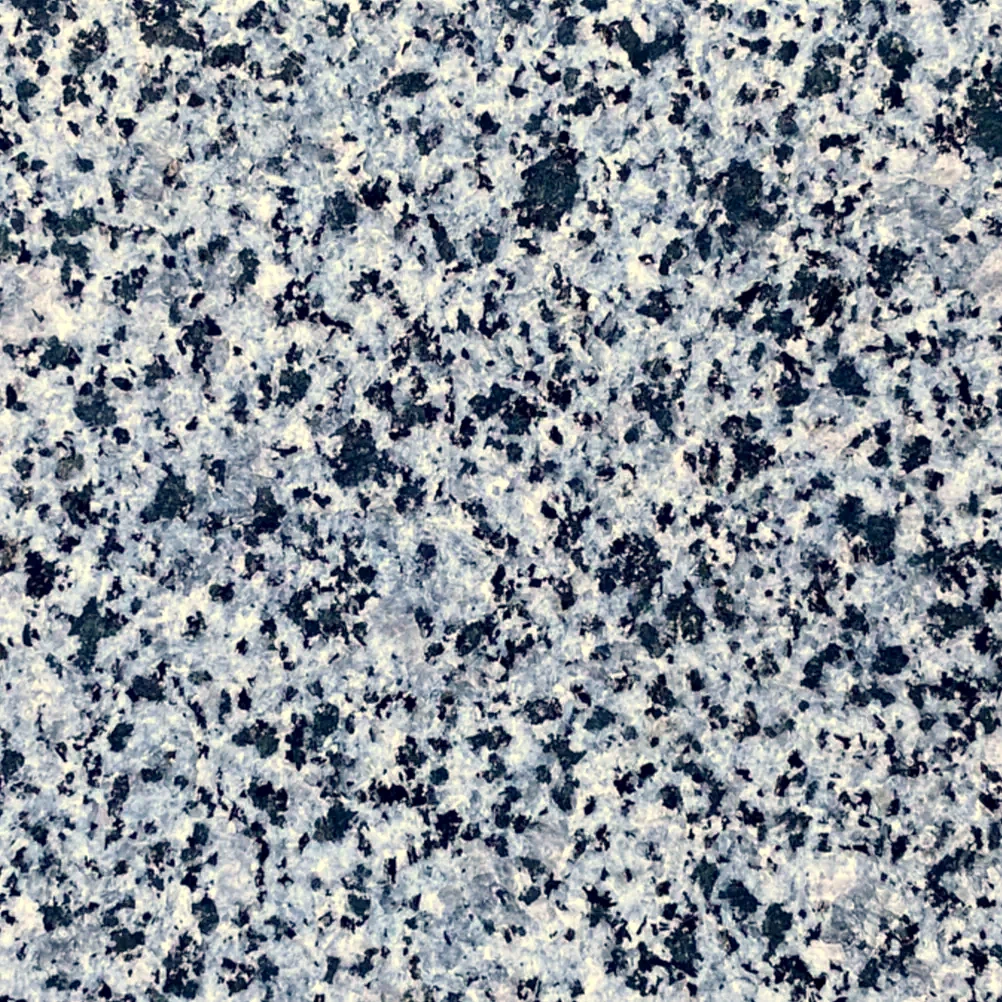
Sawn geometry helps precise joints; split faces give relief. Assess the top finish and movement comfort from a sample.
Is a layer of crushed stone enough?
There is no universal build-up. Aggregate grading, compaction, layer thickness and drainage follow site conditions.
Explore paving products or send a driveway plan.
Sources and scope
- NIKA GRAN paving products — range and stated finishes.
- Laying natural-stone paving, quick-mix — professional overview; no construction is copied without project design.
- Granite paving finishes — related guide.
Sources checked 14 October 2026. This is not a pavement structural design.
Editorial addition, 15 October 2026: an order-preparation example, not a standard, price list or guarantee of services.