Granite finishes
A finish determines not only how granite looks, but how the piece behaves in use: whether a wet step is slippery, whether a driveway keeps grip, how quickly the surface gets dirty and how long it lasts. The same stone polished shows a glossy, deep grain pattern; thermally treated it becomes matte and rough — almost a different material.
Below are the main finish types, a side-by-side comparison of the same stones in different textures, and guidance on which finish to choose for a specific job.
Granite finish types
We apply eight core textures. They differ in how the surface is treated — mechanically, thermally or with water jets — and therefore in the properties of the finished product.
| Finish | Effect on the surface | Typical use |
|---|---|---|
| Polished | Mirror gloss, reveals colour and grain pattern at its fullest | Memorials, worktops, window sills, baths, interior cladding |
| Honed | Smooth matte surface without gloss | Stairs, floors, interior pieces — less slippery than polished |
| Flamed (thermal) | Flame opens the grain: rough matte texture | Setts, paving, steps, driveways — reliable grip |
| Sandblasted | Evenly matte, slightly lighter surface | Facades, memorials, decorative elements |
| Bush hammered | Relief indentations, coarse texture with strong grip | Steps, platforms, kerbs, heavy-traffic areas |
| Split face | Uneven natural break, «live» edge | Decorative walls, parapets, fireplaces, setts |
| Sawn | Flat geometry with saw marks | Tiles, kerbs, slabs; base for further finishing |
| Tumbled | Rounded edges, «aged» stone look | Garden paths, decorative paving, setts |
| Aqua Jet | Water-jet treatment: matte texture with pronounced grain | Facades, paving, memorials — anti-glare and texture |
One stone — different textures
To show the difference, here are samples of the same stones in polished and flamed versions (two of them also with Aqua Jet). Photos were taken at our production site from current batches.
Pokostivske granite (Grey Ukraine)
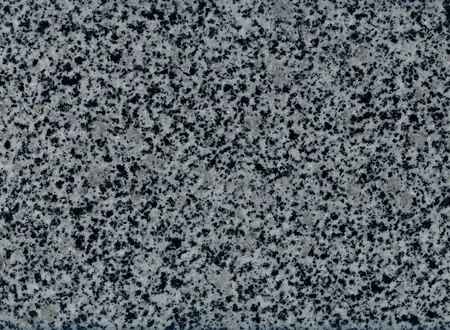
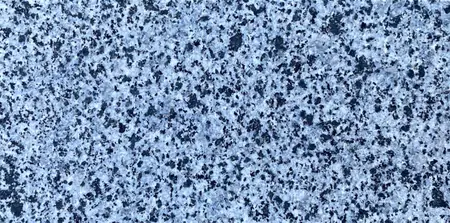
Grey even-grained granite. Polishing makes the grain pattern crisper; flaming makes the surface lighter and matte.
Caviale Nero granite (Novoselivka)
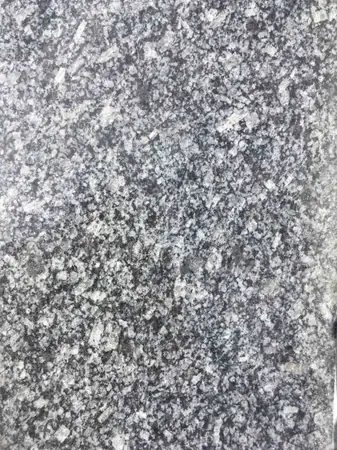

Dark coarse-grained granite. Polishing gives a deep black tone; flaming turns it graphite matte.
Flower of Ukraine granite (Mezhyrichka)
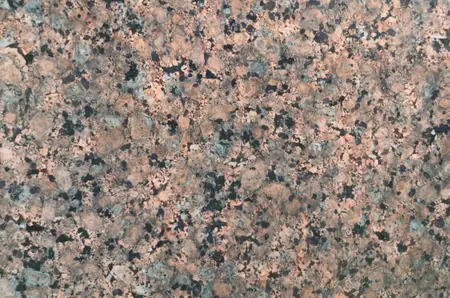
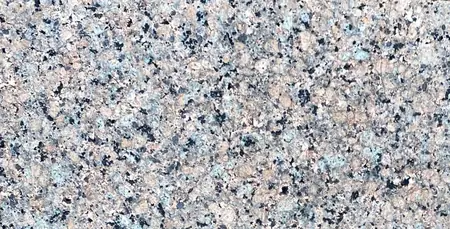
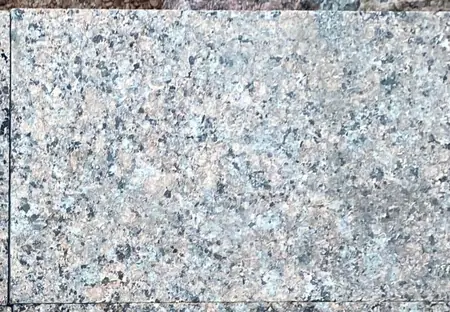
Red-brown stone with a distinctive pattern. Aqua Jet emphasises the grain without making the surface slippery.
Rosso Santiago granite (Kamiany Mist)
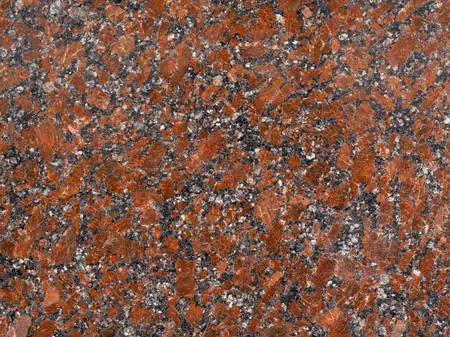
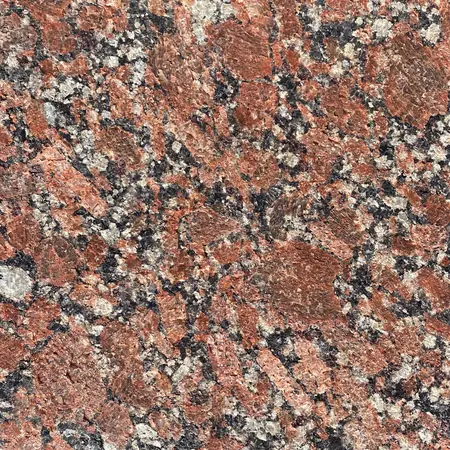
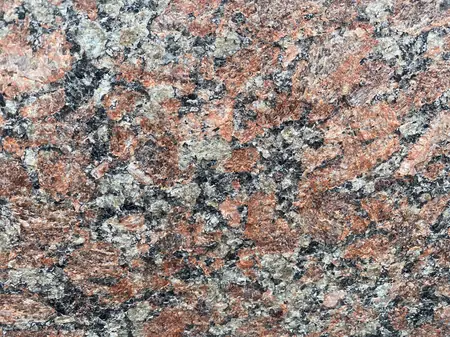
Red fine-grained granite. Flaming makes the colour richer and warmer; polishing gives a deep wine tone.
Whitered granite (Novodanilivka)
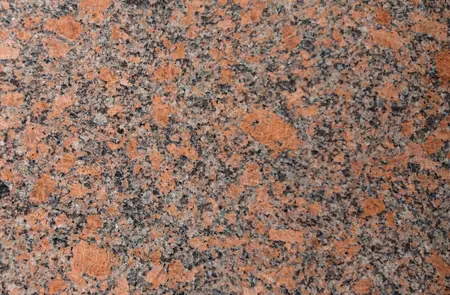

Red stone with white inclusions. Flaming makes the grain contrast stronger.
Leznykivske granite (Maple Red)
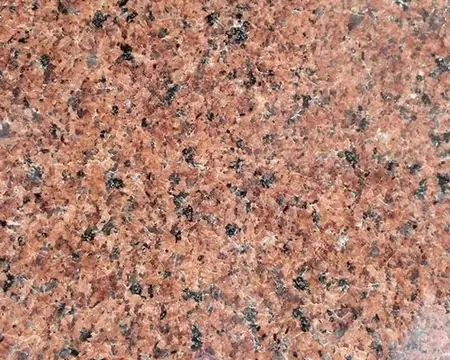
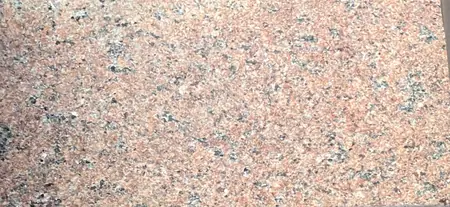
Red medium-grained granite for landscaping. Polishing shows the pattern; flaming gives an even matte tone.
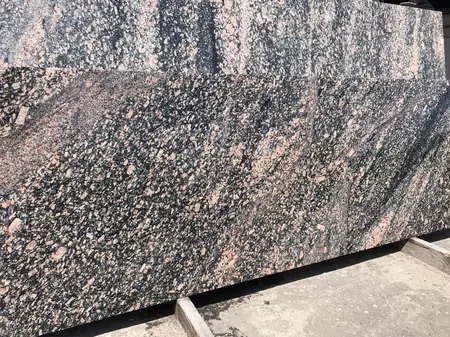
Leopard Red granite (Kornyn)
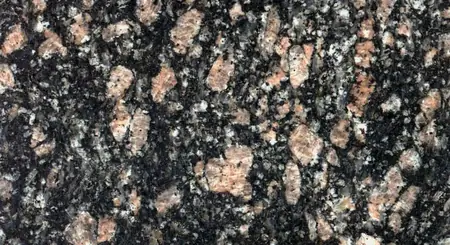
Brown-red granite with black spots. Flaming emphasises the «leopard» pattern.
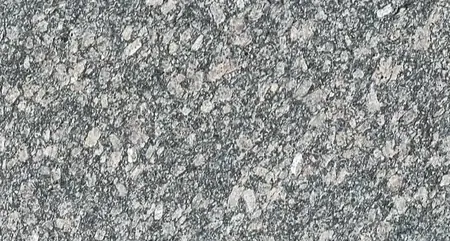
Konstantin Imperialis granite (Malofedorivka)
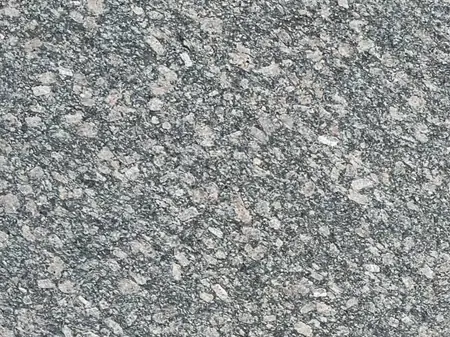
Grey granite with large light grains. Polishing gives a deep grey tone; flaming a light matte one.
Chovnova granite
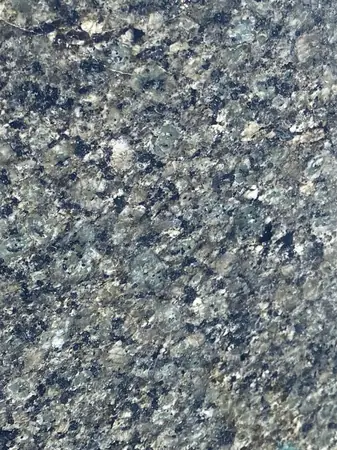

Grey granite that clearly shows the difference between gloss and matte texture even on small samples.
Which finish for which job
- Driveways, parking, paths — flamed or split face: no slipping, load-bearing, easy to clean.
- Stairs and thresholds — flamed, honed or bush hammered: grip matters, polished is unsafe here.
- Worktops, window sills, baths — polished or honed: smooth surface and visible stone pattern.
- Facades, plinths, fences — split face, sawn or sandblasted: texture and moisture resistance.
- Memorials — polished for the stele, flamed or sandblasted for the base and plinth.
- Kerbs, platforms — sawn geometry plus flamed or bush-hammered face.
Before you order
- Batch sample. Natural stone varies from batch to batch, so we agree on a physical sample before production.
- Water run-off. Paving and stairs need a 1–2% slope so the surface dries without puddles.
- Joints and grout. Sand-cement mix suits flamed and bush-hammered surfaces; polished calls for a thin joint.
- Care. Clean polished stone with mild, acid-free products; flamed and sandblasted surfaces only need a brush.
Frequently asked questions
Which granite finish is the most durable?
Flamed lasts longest: it has no polishing layer that can fade and it handles load well. Polished is durable indoors but loses gloss outdoors over time.
Can finishes be combined on one piece?
Yes, this is common practice: the stele of a memorial is polished while the base and plinth are flamed or sandblasted; on steps the face is bush hammered and the bed is sawn.
How much does finishing cost?
The price depends on the finish, area and thickness. Minimum prices for standard items are listed in the price list; the final cost is confirmed after the specification is agreed.
Is polished granite slippery outdoors?
A wet polished surface is slippery, so it is not used for paving, stairs or driveways. Outdoors we use flamed, bush-hammered or split-face textures.
How long does production take?
It depends on the item, finish and production load — we confirm after the specification is agreed. Standard finishes are usually faster than custom ones.
Can I see a sample before ordering?
Yes. We show a physical sample of the current batch with the required finish so colour and texture are not a surprise on site.
Useful sections
Compare stone varieties and see texture photos in the granite types section. Ready-made products: setts and paving, tiles, slabs and blocks, architecture and landscape, interior pieces. Minimum prices are in the price list; quantity and weight can be calculated in the calculator.