How the tumbled finish is produced
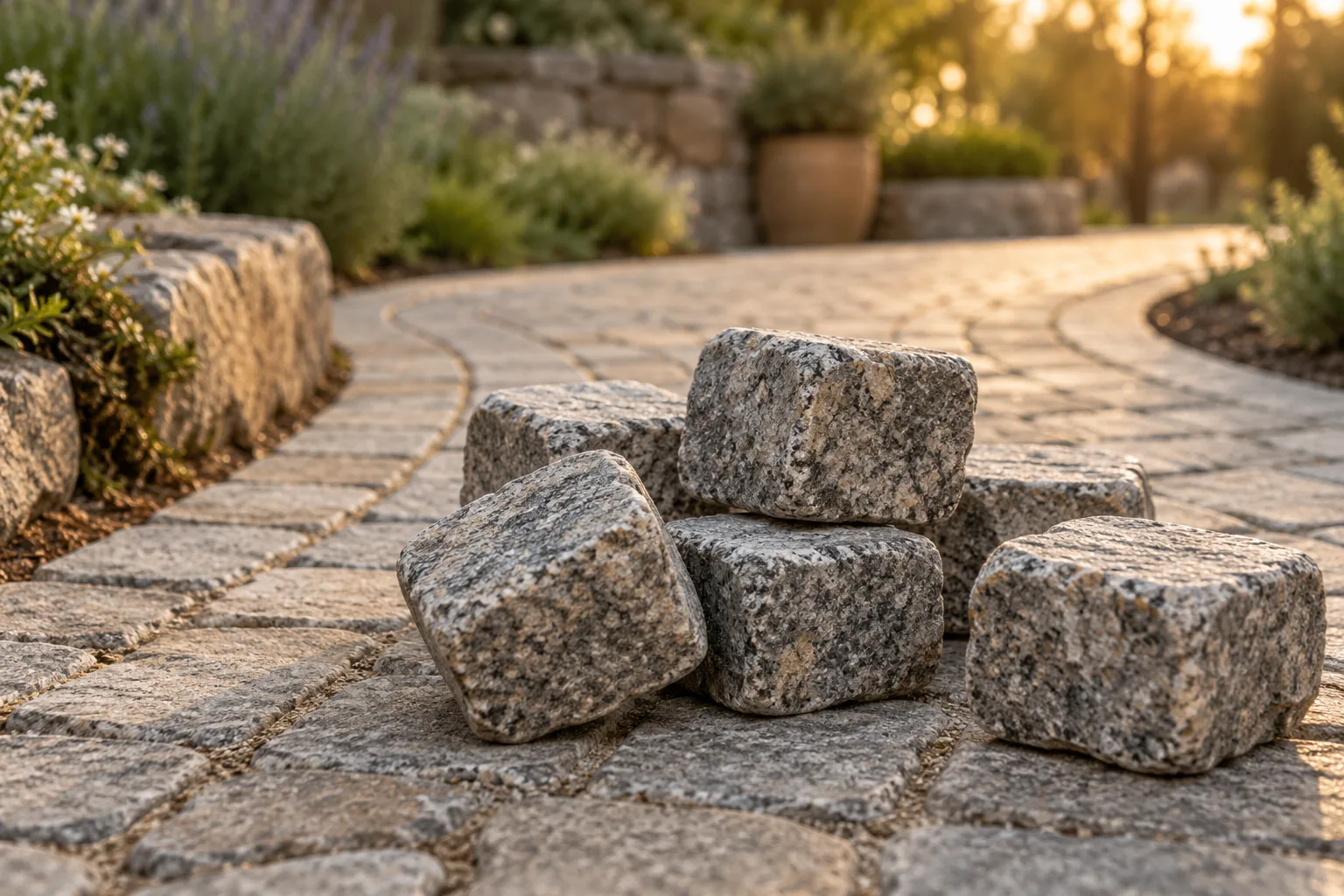
After sawing or splitting, stone is placed in a drum. As it rotates, the pieces contact each other and the abrasive medium. Edges become rounded, small chips are softened and the surface feels less sharp.
Tumbling does not make every piece identical: natural pattern, grain and permitted variations remain.
| Type | Edges | Surface | Typical appearance |
|---|---|---|---|
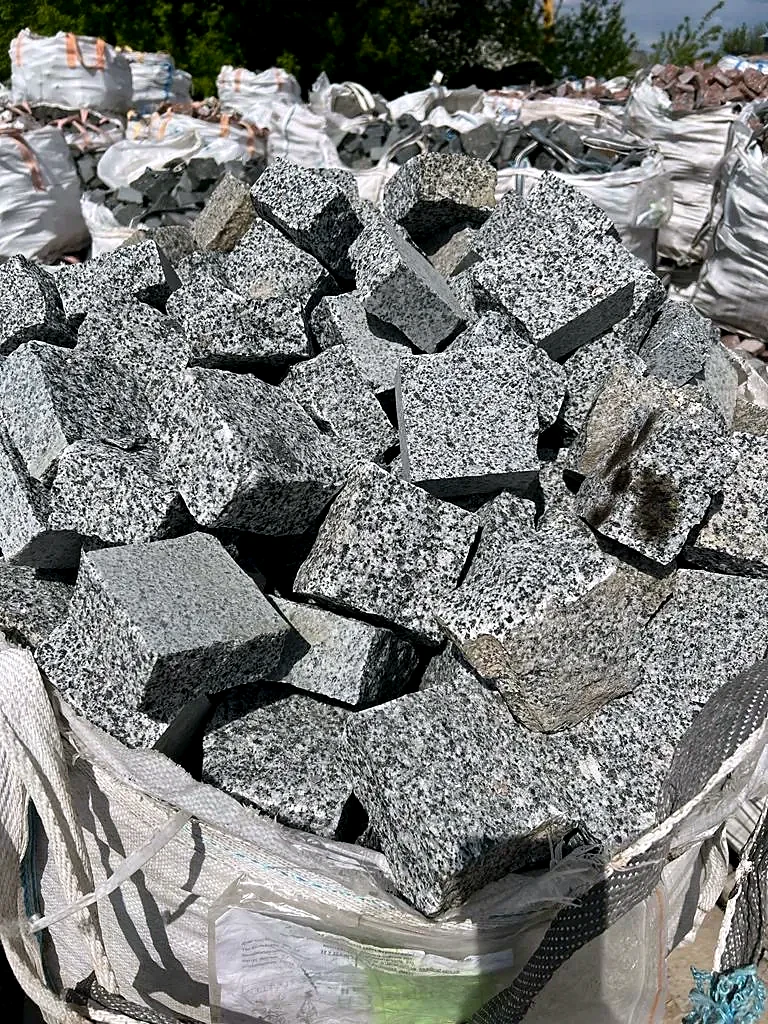
| Split | relief, natural | uneven | pronounced traditional character |
| Sawn | precise geometry | flat or additionally finished | modern restrained layout |
| Sawn-and-split | sawn sides, split top | geometric sides with a natural top | more even joints with texture |
| Tumbled | rounded | softened | aged paving |
Where it is used
Tumbled setts are often chosen for garden paths, private courtyards, terraces and restoration settings where a less sharp new appearance is wanted. Before ordering, check not only colour but dimensional tolerances, joint width and walking comfort.
NIKA GRAN lists tumbled paving as a separate product type. Compare it with split setts and sawn-and-split paving.
Agree before production
- Stone type and a current batch sample.
- Format and permitted size variation.
- Degree of edge rounding and surface character.
- Layout and joint width.
- Packing, delivery address and unloading method.
Do not select tumbled stone from a photograph alone: lighting changes the shade and image scale does not convey relief.
Frequently asked questions
Is tumbled paving slippery?
Tumbling alone does not answer this. Grip depends on stone, texture, water, contamination and gradient. A specific tested product is needed where performance is specified.
Is it suitable for a driveway?
It may be, but base construction, format and thickness follow the load and project design.
Are all pieces identical?
No. Natural stone and mechanical tumbling produce acceptable variation that should be agreed from a sample.
Explore the paving catalogue or send project details.
Sources and scope
- NIKA GRAN tumbled paving — range and stated finish.
- Tumbled stone cobbles and setts — commercial terminology example; that supplier's specifications are not claims about NIKA GRAN.
- Paving type comparison — related guide.
Sources checked 14 October 2026.