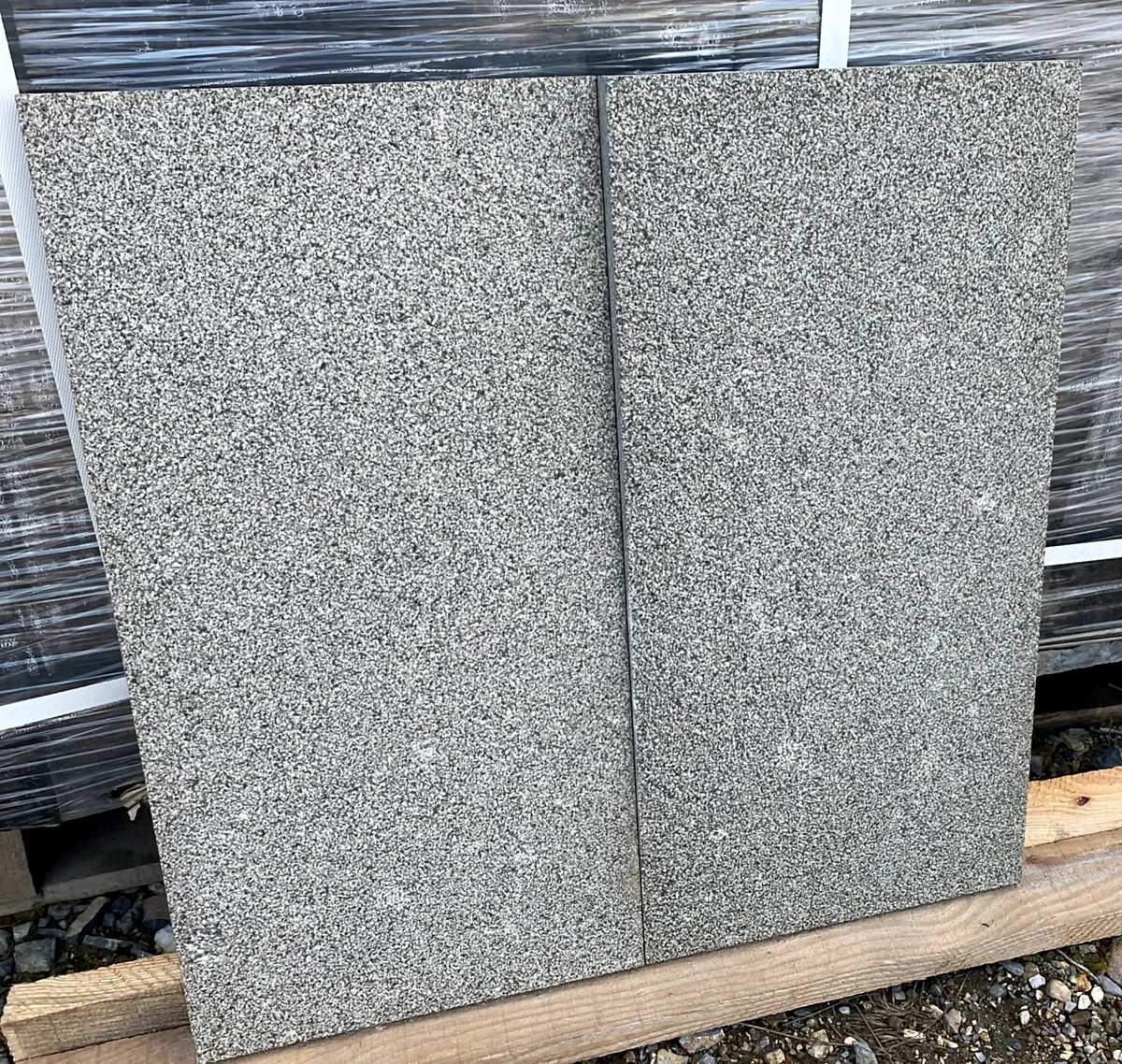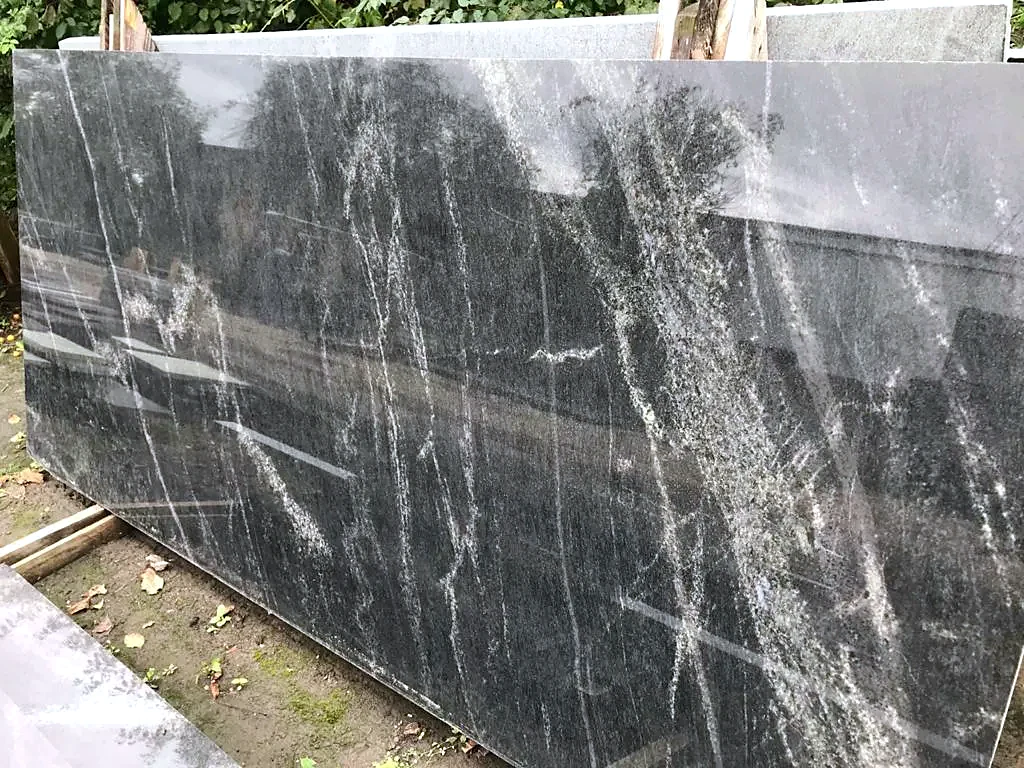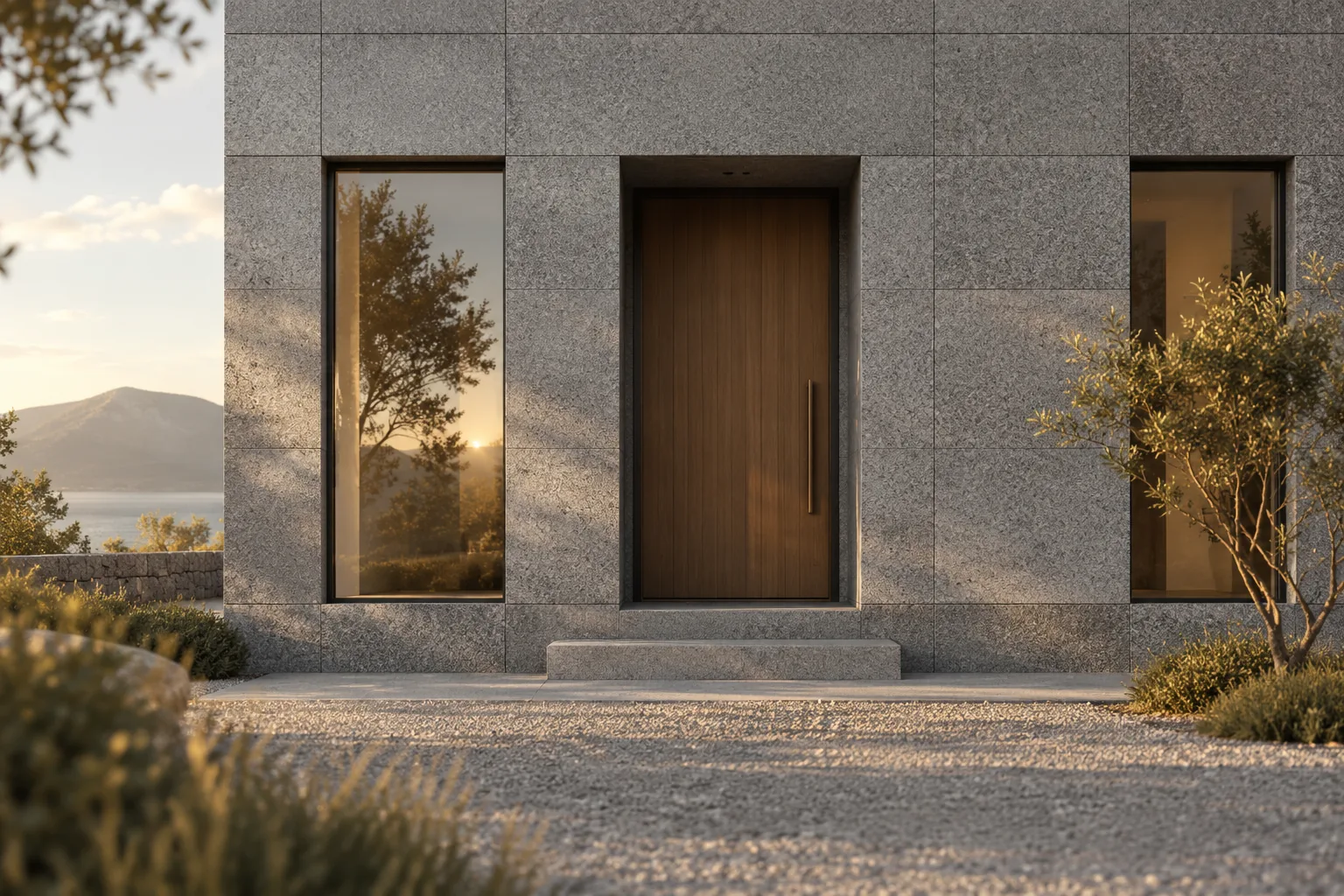
The choice is driven not only by colour but by how the plate will be fixed and how elements meet.
What drives the choice
| Criterion | What to consider |
|---|---|
| Surface | polishing gives gloss, honing a matt finish, flaming a texture |
| Thickness | follows the fixing system and loads |
| Format | affects the number of joints and the façade pattern |
| Colour | dark stones create contrast, light ones a calm plane |
| Joints | width and filling are decided in advance |
| Corner pieces | agreed separately to avoid visible cut edges |
What to avoid
- Choosing thickness from a photograph without considering the fixing.
- Leaving corner and junction decisions until installation.
- Mixing finishes on one plane without intent.
- Reading “flamed” as a guarantee of specific values without documentation.
Façade stone fixing is designed by a specialist for the substrate and loads. We produce cladding plates and rock-face plates to project sizes.
Frequently asked questions
Which surface suits a plinth?
Textured or matt surfaces are often used, as they are practical where moisture and dirt occur.
Can polished stone and rock-face be combined?
Yes, it is a common approach for accents. Agree thicknesses and joints so the transition looks intentional.
Do you produce plates to size?
Yes, format, thickness and finish are agreed from drawings.
Explore plates and slabs or send drawings.
Sources and scope
- NIKA GRAN cladding plates — range and stated finishes.
- Granite Setts UK: finishes — finish terminology.
The fixing design is set by the designer; this guide helps prepare a product order.