Holovyne labradorite
In short
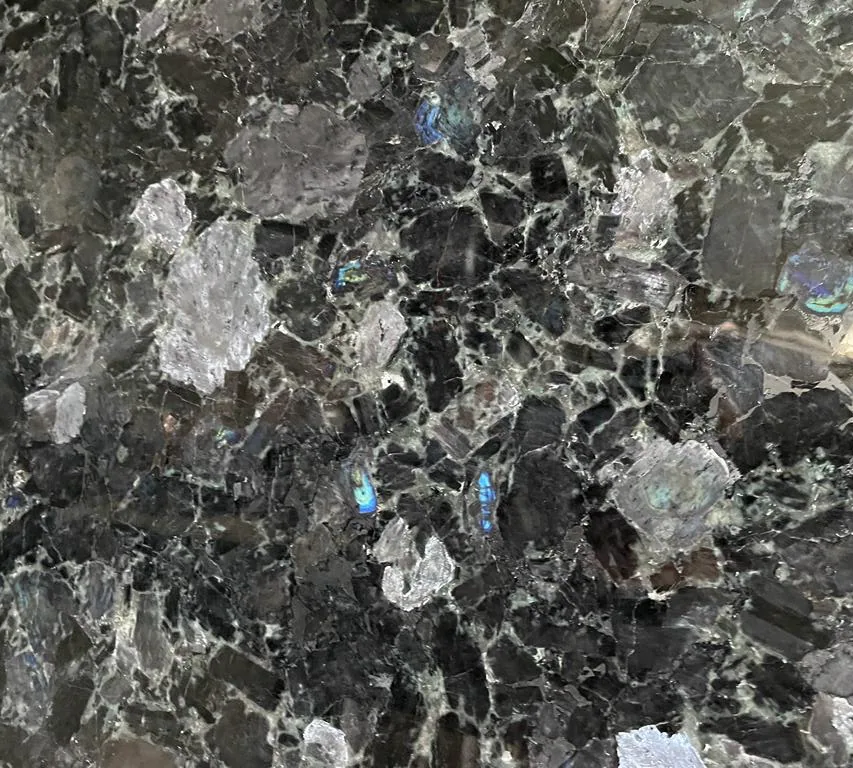
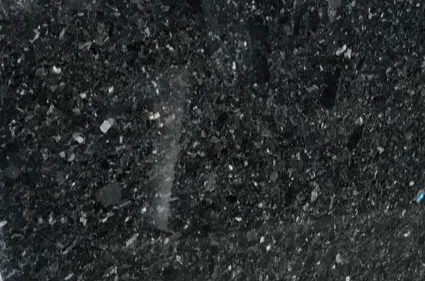
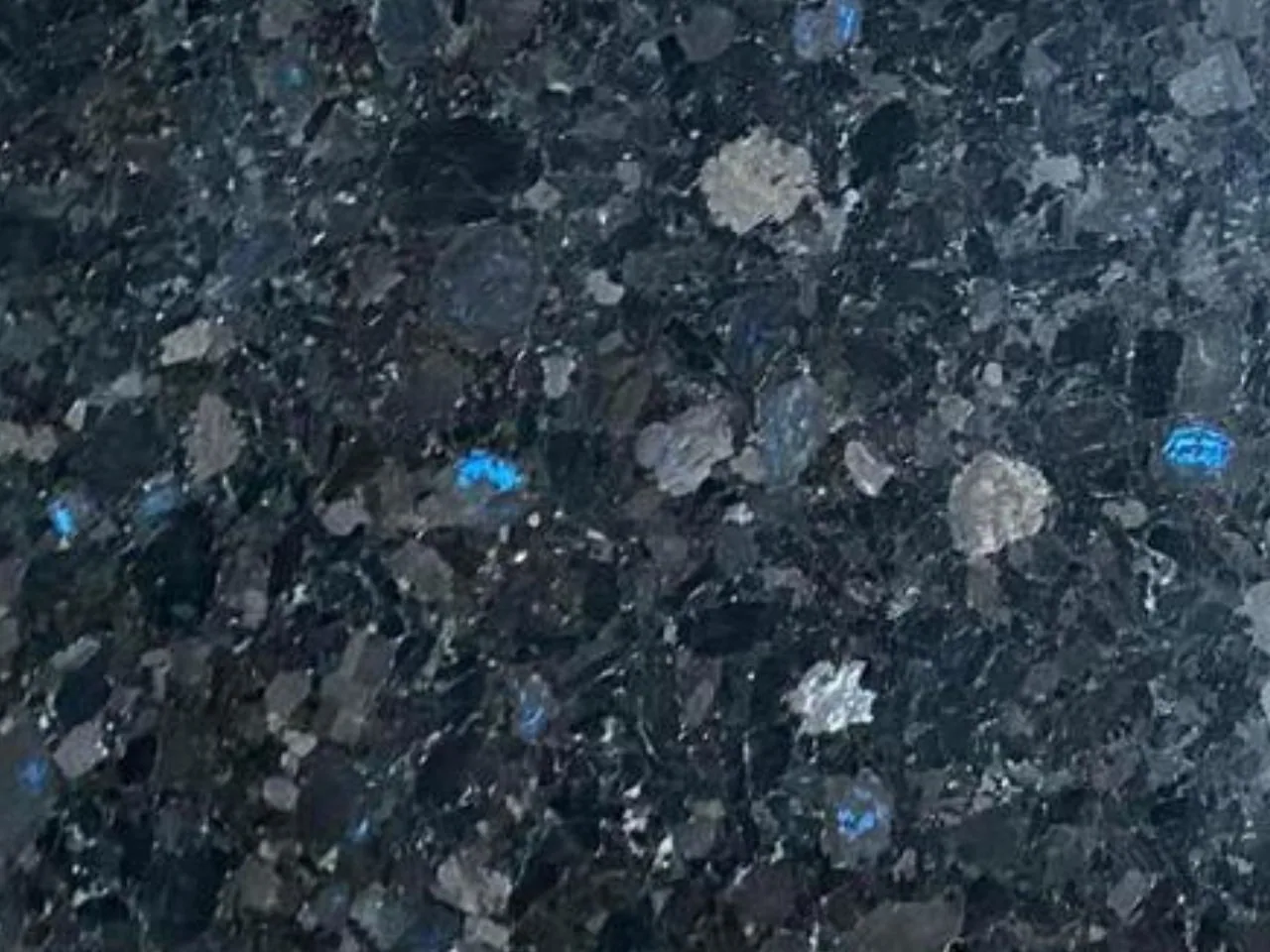
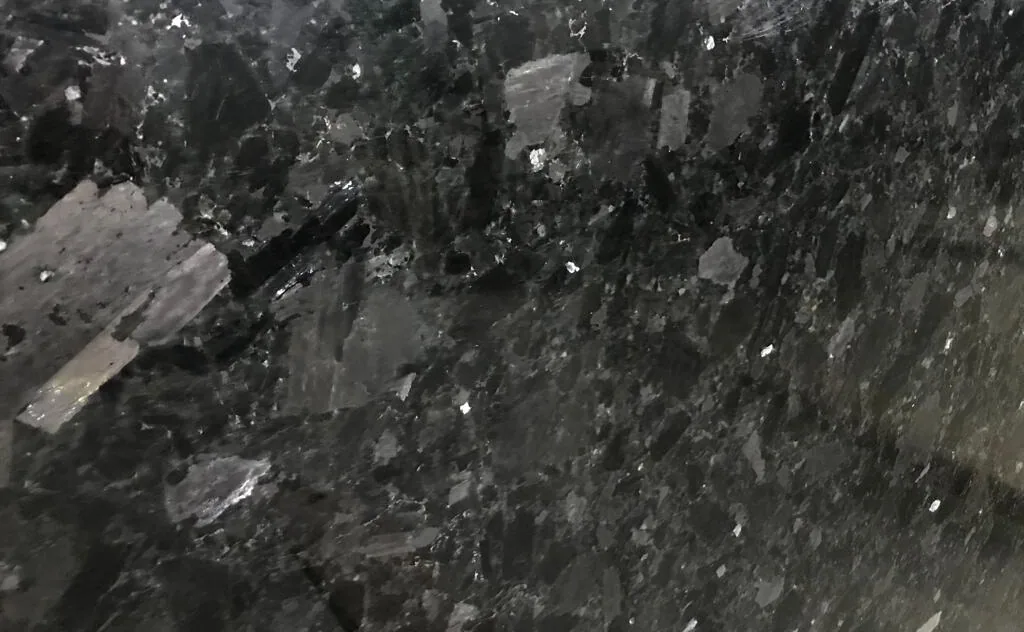
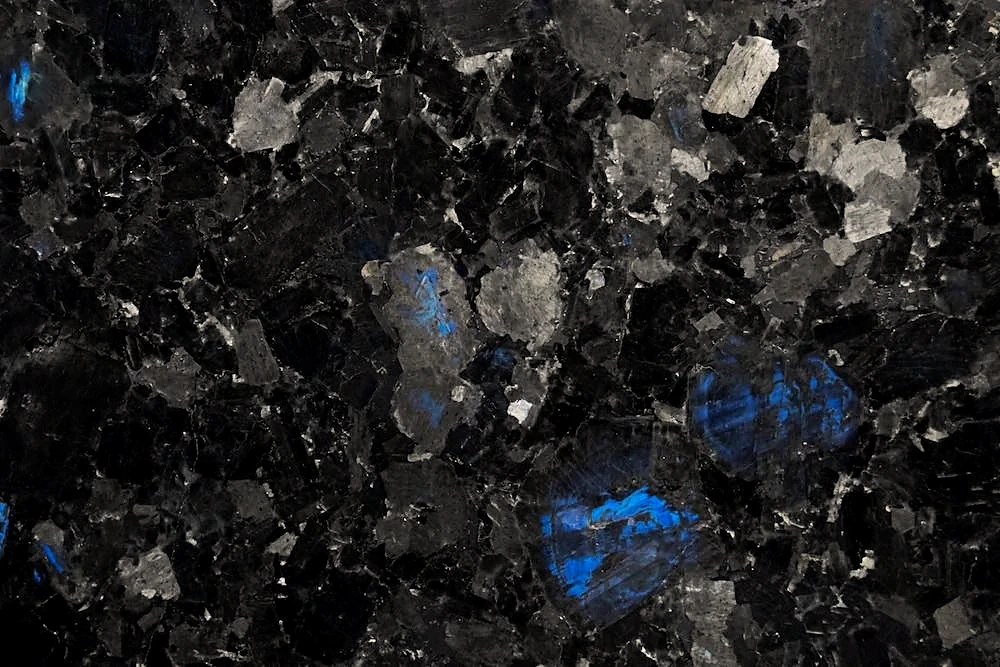
Holovyne labradorite is dark, almost black, with blue and blue-green iridescence. Holovyne labradorite is a dark decorative stone with natural blue and blue-green iridescence. It is particularly striking when polished, where the optical effect shows most fully.
The visibility of the iridescence changes with the angle of light and view, so a frame does not guarantee the number, size or position of flashes in a future batch.
Compare this stone with the others in the granite types section, and read more about sample approval in Holovyne labradorite: approving pattern and optical effect.
Specifications
| Parameter | Description |
|---|---|
| Colour | dark, almost black, with blue and blue-green iridescence |
| Finish and grain | dense fine grain; the optical flashes depend on the viewing angle |
| Typical use | interiors, panels, façades, memorials |
| Finishes | polished above all; also honed and thermal |
| Maintenance | Regular cleaning with neutral, non-abrasive products; the exact chemistry and cleaning frequency are agreed for the finish and the location. |
Where it is used
The stone is chosen for its decorative effect, so it is usually applied in accent solutions:
- interior panels and decorative surfaces
- façades and feature architectural details
- memorial products, where the dark background gives clear contrast
- cladding plates and slabs
Products made from this stone are collected in the catalogue: Holovyne labradorite products. Format, thickness and finish are confirmed for the specific project.
What to consider
Iridescence is an optical effect, not a print. It depends on the cutting direction, the polish and the light, so it needs separate approval.
- The number, size and position of optical flashes in a future batch are not guaranteed.
- Check the cutting direction and the layout on several units, not on one frame.
- Polishing strengthens the effect, while a honed or thermal surface subdues it.
- Dark stone shows streaks and fingerprints clearly, so plan maintenance in advance.
- Suitability of an exterior format is determined by the project and the finish.
Labradorite should not be judged from a single shot: the effect appears as light moves, so the final decision is made on a sample.
Physical and mechanical properties
| Property | Value | Source |
|---|---|---|
| Density | 2,700–2,990 kg/m³; typical 2,790 kg/m³ | ZSTU course notes (2.7–2.99 g/cm³); Ukrainian Wikipedia, 'Holovyne labradorite deposit' citing the Mining Encyclopaedic Dictionary (average density 2,790 kg/m³); ritual-stone.com.ua (bulk weight 2,970 kg/m³) |
| Water absorption | 0.33–0.40 % | Ukrainian Wikipedia, 'Holovyne labradorite deposit' (0.33 %); ritual-stone.com.ua (0.35 %); kameniv.com.ua, labradorite Irina Blue / Extra Blue (0.40 %; deposit not named on the page) |
| Compressive strength | 100–130 MPa (reference sources); 104–206 MPa per the manufacturer specification | Ukrainian Wikipedia — 100–120 MPa (dry); ZSTU course notes — 114–130 MPa; ritual-stone.com.ua — 104–206 MPa |
| Abrasion | 0.46–1.40 g/cm² | ZSTU course notes (0.5–1.4 g/cm²); Ukrainian Wikipedia (0.68 g/cm²); ritual-stone.com.ua (0.46–0.68 g/cm²) |
| Radiation safety class | Class 1 (unrestricted use) | spokij.com.ua, 'Holovyne labradorite'; ritual-stone.com.ua, 'Holovyne labradorite' (radiation class 1) |
| Mineral composition | plagioclase 87–99 %, pyroxene 0–4 %, alkali feldspar 0–6 %, quartz 0–2 %, olivine 0–2 % | ZSTU course notes, Holovyne labradorite deposit (Black Sea) |
The values are typical/reference figures for the Holovyne labradorite deposit (trade name Black Sea). The kameniv.com.ua labradorite data is not explicitly tied to the deposit, so the 0.40 % water absorption is given with that caveat. Actual batch figures (especially strength and abrasion, which have a wide spread) are confirmed by the certificate.
Products in this stone
Frequently asked questions
Are the blue flashes always visible?
No. The visibility of the iridescence depends on the angle of light and view, and on the finish. Polishing reveals the effect most strongly.
Does a sample guarantee the number and position of flashes?
No. The number, size and position of optical flashes in a future batch are not guaranteed; they are approved from a physical sample.
Can labradorite be used outdoors?
The material is considered for façades and memorial products, but the suitability of a specific finish for outdoor conditions is checked against the project.